
More than just hot, Cindy had a bad girl vibe that made her particularly alluring to a rutting teen. She was concurrently the meanest and the coolest waitress at Ye Lion’s Den restaurant in Ogden, Utah, where I worked as a dishwasher and later a pantry cook during my junior and senior years of high school. You didn’t mess with Cindy. Despite her relatively small stature, she was honest-to-God scary. I had no doubt that she was capable and would have enjoyed beating the crap out of any of us male coworkers if it were not for our universal recognition of that fact and resulting immediate deference to her anytime she felt crossed.
Cindy drove one of those big 70s boat cars, like a Galaxie 500 or a Plymouth Fury, which seemed out of whack with her petite figure but fit her imposing personality exactly. She came across as a hard-partying type, but upon revisiting my memories now, I realize I only ever saw her drink a few beers. While intimidating, she was good to me at work, regularly sharing a small portion of her tips at the end of shared shifts.
In her mid-20s, Cindy lived alone in an old house in a declining neighborhood somewhere around Ogden’s 35th Street. One Friday night at work, she asked if I’d be willing to come over the next day to clean up her yard, mowing and edging the grass and weeding the small flower bed. She said she’d pay me for the work. I accepted immediately, first because she was foxy and second because Cindy was “worldly” and I’d seen the movie, man… Summer of ’42 or Summer of ’81, it didn’t matter, I knew how the story ended. Saturday afternoon couldn’t come fast enough.
After carefully choosing my board shorts and faded Keep on Truckin’ t-shirt, I arrived at Cindy’s house shortly after noon in my stepdad’s silver 1963 Willys Jeep pick-up with our lawn mower and manual edger in the bed. As I unloaded, Cindy came out to the porch in a terrycloth robe, with her blonde hair pulled up and looking like she’d just woken up. We exchanged greetings and I said I’d get right to work. Cindy told me to let her know if I needed anything and headed inside as I began to mow. I imagined she was occasionally watching from the window while I muscled the mower through the overgrown grass, but I never looked to see if I was right (mainly out of fear that I might actually see her).
As I finished mowing and began to edge, Cindy came outside to bring me a cold drink. She had showered and was barefoot, wearing cut-off shorts and a light, loose blouse. Having usually only seen her in her Ye Lion’s Den waitress uniform, I remember thinking she was goddess-level sexy. With my thoughts migrating “elsewhere” as I watched Cindy climb the porch steps and reenter the house, the subsequent edging and weeding passed in a blur.
Sweaty and sunburned (but fancying myself glistening and tanned), I piled my tools back into the truck and knocked on Cindy’s door to tell her I had finished and see about getting paid – sweet, glorious, long-awaited “paid.” Cindy said the yard looked wonderful and that I had done a great job. She invited me in and led me to the living room, indicating I should sit on the couch while she went to the kitchen to bring me another cold beverage. She was still wearing the shorts and loose blouse, with enough buttons undone that, as she bent over to hand me my glass, I could tell that she wasn’t wearing a bra. Dear Penthouse Forum …
Cindy sat down across from me and, as I drank, I tried to think of things to say that would make me seem cool to this hot, experienced older woman. Noticing some records spread on the floor near the stereo, I pointed out Procol Harum’s Broken Barricades LP, commenting that I had never heard it but was a huge fan of the solo work of the band’s guitarist, Robin Trower, after he left the group. She said it was an excellent album, one of her favorites, and bent down again – holy heart-pounding glory be to God – to grab the album and pass it over to me.
As I fondled the cover and mumbled something asinine about the awesome artwork, Cindy reached into her purse and pulled out a ten-dollar bill. She handed me the bill and asked if that was enough. I said it was more than enough and that, as a friend, I’d help her out anytime whether she paid me or not. She smiled broadly, in a way that instantly banished all the tense sexy from her face and replaced it with unburdened beautiful. She came over and gave me a sincere, friendly kiss on the cheek, simultaneously making me feel like the underage doofus that I certainly was while also letting me know that she genuinely liked me.
Cindy said she had to get ready as she had the early shift at the restaurant, and mentioned that I was welcome to take the LP with me if I wanted to borrow it. Recognizing dream was not to become reality that day, I accepted the offer. As I walked “unpaid” to the truck with the sawbuck in my pocket and the record under my arm, along with the disappointment of the unconsummated fantasy, I felt the self-satisfaction of having done something nice for a deserving and grateful friend.
I worked at Ye Lion’s Den for another year and Cindy continued to make me feel like a friend, while still terrorizing all of us at the same time. For whatever reason, I don’t think I ever went to her house again, and my Summer of ’42 daydream was certainly never realized.
On the other hand, one of the easy highpoints of my seventeenth year was the night when Cindy, probably tipsy, came into the restaurant’s back room where I was washing pots and pans to share tips with me after the final patrons had departed. As she snuck up behind me and reached around to slowly ease her hand deep into the front pocket of my jeans to donate a few dollars, I must have looked like a terrified deer in the headlights as my whole body tensed and I nervously mumbled a feeble “thanks.” (I must admit I’ve reimagined that moment repeatedly over the years, envisioning a significantly altered personal response and dénouement.)
Procol Harum: Broken Barricades (1971)
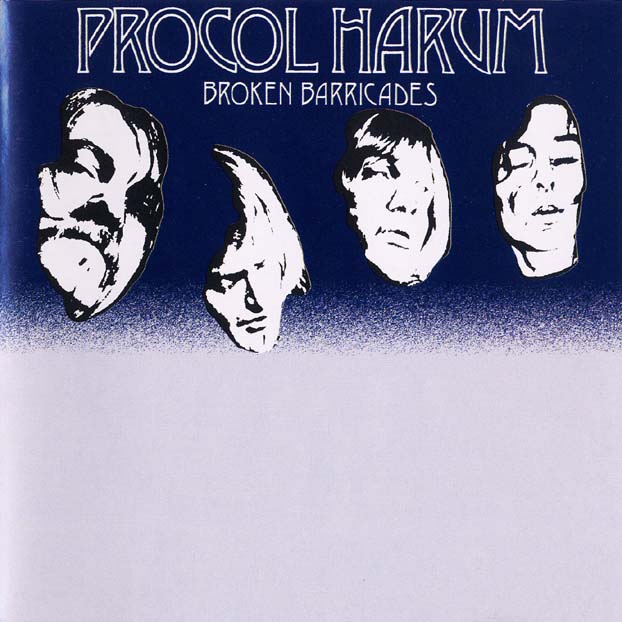
While my fantasy deflowering by Cindy never played out, she forever gets credit for introducing me to an exceptional album. The last Procol Harum record on which guitarist Robin Trower played before going solo, Broken Barricades is the relatively least progressive and most traditionally hard rock outing by the band to that point in their history. Nothing like “A Whiter Shade of Pale,” the only Procol Harum song most folks know nowadays, the tracks on Broken Barricades go easy on the organ, emphasizing instead the pairing of Trower’s searing guitar with Gary Brooker’s evocative piano.
While everything on the album emphasizes the melodic over the bombastic, the harder rocking songs tend to be underpinned by a strong, tight groove over which Trower plays some of the raunchiest guitar of his career. Of these, the guitar-soaked “Playmate of the Mouth” and the strings-laden “Simple Sister” are standouts. Among the few slower and more orchestral songs, the moving “Luskus Delph,” on which Brooker’s beautiful piano and immediately recognizable vocals carry the weight, harkens back to the sea-faring feeling often found on Procol Harum’s preceding LPs. The album also boasts the unique “Song for a Dreamer,” which Trower composed in tribute to the then recently passed Jimi Hendrix, and on which Trower provides a rare lead vocal. The atmospheric “Song for a Dreamer” calls to mind the more melodic portions of “1983… (A Merman I Should Turn to Be)” off of Hendrix’s own Electric Ladyland.
In no way dismissing the contributions by Brooker and the rest of the band, Broken Barricades is very much Trower’s shining moment within the Procol Harum catalogue. One can almost sense him chomping at the bit to move beyond the confines of the band. Indeed, the Trower-composed “Memorial Drive” would fit seamlessly on just about any of the Trower solo albums that would follow as the 70s went on. As for Keith Reid’s lyrics, which adorn all eight tracks, they are as dense and impenetrable as ever, while somehow managing to “fit” perfectly nonetheless.
Broken Barricades is an outstanding album that has not suffered from the passage of time in the four decades since its release. It still sounds as vibrant and fresh now as it must have in 1971.
Playmate of the Mouth:
Simple Sister:
Luskus Delph:
Song for a Dreamer:
Memorial Drive:
It started when our daughter – born an incomprehensible 20 years after the last U.S. troops left Vietnam – came home from school anxious for us to watch a documentary she had seen in her U.S. history class. The film, Dear America: Letters Home from Vietnam, had moved her greatly and she had many questions about the Vietnam War: Had anyone from our family been in the war? Why were our soldiers there? Were the soldiers really that young? We watched the documentary online via YouTube and addressed her questions as best we could. Over the course of a few subsequent weekends, she brought home the movies Platoon and Apocalypse Now and continued to ask the occasional question, most of which began with “Why?”. Being a normal, busy teenager however, her temporary fixation on Vietnam eventually waned as Hamlet, precalculus, volleyball, and Law and Order: SVU laid claim on her limited available attention. My thoughts, on the other hand, were not so fast to move on:
—————————————-
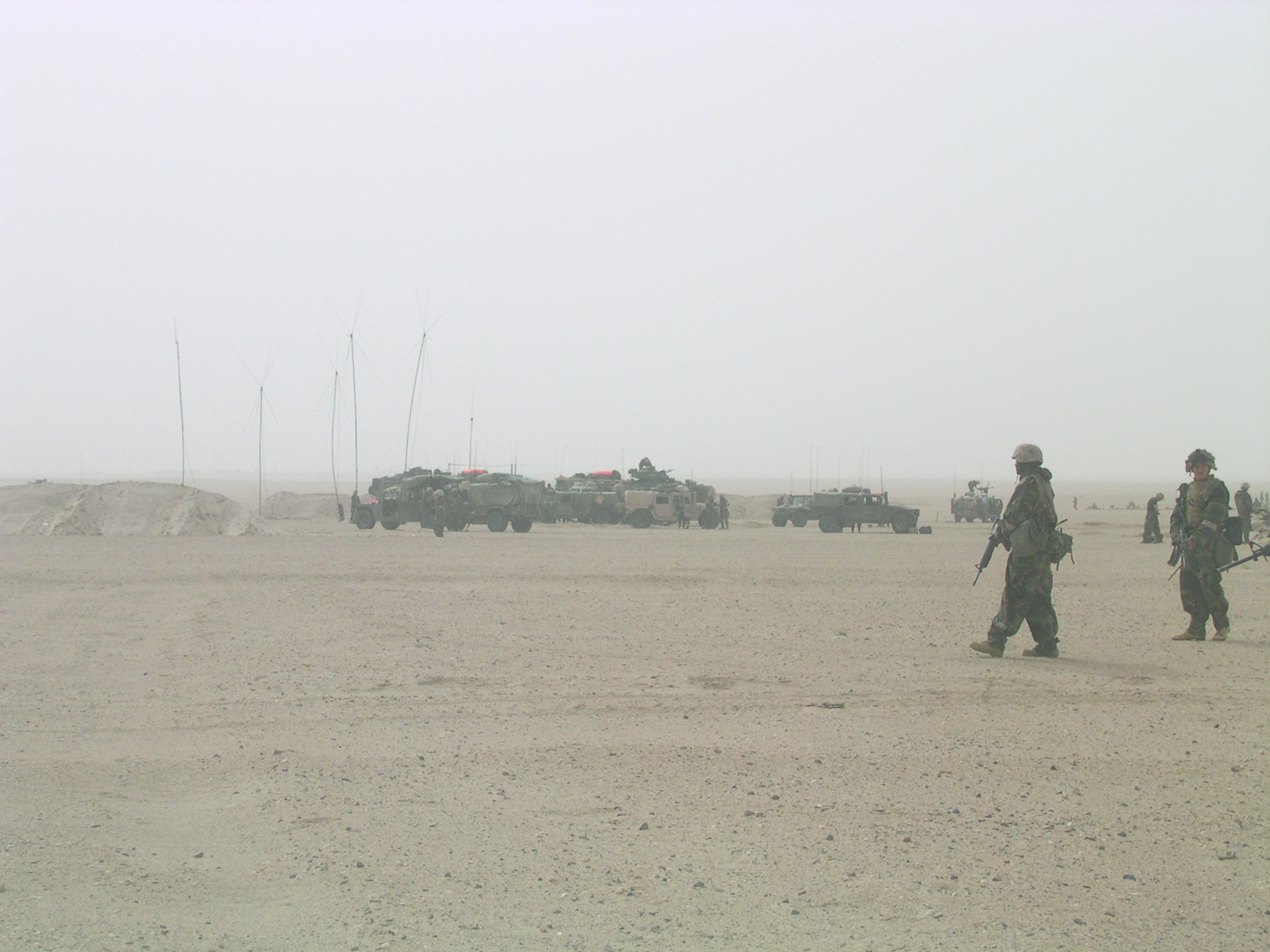
Watching the U.S. military machine transform the vast sandscape into a massive complex of hangars, tarmacs, roads, tents, and mess halls, all filled to overflowing with people and materiel, was awe-inspiring. When the barber shop, convenience store, and other amenities were eventually set up in tents and cargo containers, I became a regular visitor.
One day while waiting in line at the internet tent to get my half-hour online, I struck up a conversation with an 18-year-old queue companion. He told me he was awaiting his turn so he could send his grandmother an email to thank her for the $100 bill she’d sent him in the mail. Grandma was apparently super cool and the young troop already had his eye on the video game he was going to buy with the birthday cash. He knew his tent-mates would be pumped and he foresaw some epic competitions occurring as they sat between the sand berms waiting to be told what would happen next. He’d heard a rumor that there could be some elite enemy units waiting for them when they eventually crossed the border; had I heard anything about that? As I left him to take my turn at the computer terminal, I thought about how much he reminded me of my own school-age son back home. I hadn’t been around soldiers much in my life to that point and I found myself wondering about boys that young being assigned to fight our battles.
—————————————-
The 20-something lieutenant had been placed in charge of a Force Protection unit. When he learned I was also from Utah, he started seeking me out, first just to chat and later to seek advice. He was from a tiny, rural town and this was his first combat tour. He spoke often to his mom and sister back home often via Skype to give them a blow-by-blow of everything he was experiencing. He had a hard time with a 30-something sergeant who repeatedly disrespected his authority in front of the unit and asked me what I thought he should do. I shared personal stories and tried to build his confidence in his leadership role. Privately, I asked some other folk to make an active show of respect for the lieutenant’s rank and leadership in front of the sergeant. Things seemed to get better.
After a few months, the lieutenant sought me out one late night after returning from a mission. As was all too routine, their convoy had been attacked while returning from a visit to an isolated village. This occasion was a little different in that they’d taken fire over the course of a few kilometers rather than at one ambush site, had suffered a couple of non-life-threatening casualties, and had returned fire for an extended period. The lieutenant excitedly shared with me that he had gotten his first confirmed kill of an enemy fighter that day. He had already Skyped with his mom and told her all about it; she was proud of him and was going to tell the rest of the family. He described the event with a youthful enthusiasm and pride reminiscent of players on my son’s high school basketball team describing last-minute heroics to beat crosstown rivals. He felt vindicated as a “real soldier.” I later learned from the commanding colonel that the lieutenant had demonstrated strong leadership under pressure, calmly and maturely taking charge of the situation, deftly commanding his troops and getting every member of the convoy back to the base alive.
—————————————-
While getting a tour of the base shortly after my arrival, I was escorted into the wooden shack that housed the two-person Counter Remote Control Improvised Explosive Device (RCIED) Electronic Warfare (CREW) team. Being computer/electronics geeks, the guys had wired their small space to host four networked terminals so they could play multiplayer video games. They would regularly invite small combat units that briefly paused at the base to utilize the gaming set-up and the day of my visit was no exception. Four young Marines from an Embedded Training Team (ETT) were using the terminals for a raucous game of Counter-Strike, calling each other names and loudly bragging about their individual skills. I sat with the CREW guys and the Marines laughing and listening to their trash talk for about 30 minutes before some well-meaning bonehead came into the building and referred to me in some deferential way that made the Marines uncomfortable about the casual manner they had taken with me. Bummed, but understanding, I left the CREW shack and continued my tour.
A few weeks later, five members of that ETT along with several of the indigenous troops they were accompanying were killed in an ambush after having accepted an invitation to come into a village to meet with tribal elders. I was told some of the fallen had been amongst those in the CREW shack during my visit, but I had no way to confirm this. The team’s actions in the battle resulted in several citations for valor, some posthumous.
I wept alone in my room on the night I heard of the Marines’ deaths. It was heartbreaking to think that those men who died, so much braver than me, were also the kids who had been so embarrassed for having let me hear their youthful boasts of girls and games, and who had seemed to have their whole lives ahead of them when our paths had crossed.
(edited and reposted from September 2012)

Something just doesn’t feel right. I have a vague sense that there is something pending; a problem to resolve or otherwise deal with to avoid some potential future disaster. But there’s no substance to the sensation. I worry I am forgetting something, though I know I’m not. This happens to me on occasion, more often than I’d like. It likely results from a recent conflux of minor inconveniences; a letter warning of a late fee if my daughter’s first month’s dorm rent is not paid on time even though the payment has been made and the letter itself cites an owed balance of $0, a response to an online inquiry about a factory-defective ice tea brewer that gives only a rote instruction to “return it to your retailer” even though my message clearly stated the defect was only discovered after the seller’s allowable return period due to my recent move, a missive indicating the mailbox at the rented house back home where my family resides without me is out of compliance with neighborhood regulations regarding lean angle and must be straightened within ten days or the landlord will be fined. None of these things can be fixed with my 3,000-mile screwdriver. In the end, all will be solved or fade away of their own or someone else’s volition. There is no imminent doom, and yet my mind is heavy, weighed down by nebulous worry.
“And you don’t need to check on how you feel, just keep repeating that none of this is real.”
I first heard the album Reflections by Gil Scott-Heron in mid-1985. My buddy Brett and I had driven my ’74 Volkswagen Super Beetle from Utah to Chicago to welcome Bill-o back from his Mormon missionary service in Peru, service the two of us had also completed just a few months before. I considered Bill my best friend and confidante at the time and thus was prone to his influence. A “smooth soul” enthusiast, Bill had filled my head with talk of Luther Vandross, Teddy Pendergrass, and Al Green during our shared time in the land of the Incas, but none of it really took for me. Reflections stuck hard however when Bill played it as background music during an impromptu gathering of friends there in his suburban home.
“I take pride in what’s mine – is that really a crime – when you know I ain’t got nothing else?”
Unlike my current unjustified anxiety, Reflections soundtracks actual impending doom in the face of apparent happy reality. The music is funky smooth, with bright horns riding on grooving bass, jazzy snares, and punctuated piano. Whether singing or speaking his poetry, Gil’s voice is silky suave and welcoming. But listen to his words and sense the looming upheaval behind the sheen. The shit is about to go down and it is going to take your ignorant ass by surprise.
“The storm is coming, it rolls on the waves.”
It’s hard to imagine now the effect that the foreboding, angry messages of the song/poems “Inner City Blues (Poem: The Siege of New Orleans)” and “’B’ Movie” had on this obliviously sheltered small town boy when I first heard them. I had grown up deep within what would become Reagan country in the 1980s. My earliest political memory is being ardently teased at the age of 8 with chants of “Nixon Nixon he’s our man, McGovern belongs in the garbage can” by older neighborhood kids who I’d told of my outlier parents’ expressed preference in the 1972 U.S. presidential election. The number of black students in my high school graduating class of over 300 was easily in the single digits. By the time of my 1985 road trip to Chicago however, I’d spent 18 months preaching door-to-door in the urban plight and underdeveloped mountain villages of Peru. I thought of myself as worldly and informed. Gil Scott-Heron showed me otherwise.
“Yea, it makes me wanna holler, and throw up both my hands.”
Gil’s stinging takedown of the Reagan mandate in “’B’ Movie” and distressingly intimate chronicle of inner city struggle in “The Siege of New Orleans” invigorate and shame in equal measure. I outwardly act as a fellow traveler with the narrator; anti-establishment and pledged to the ranks of the oppressed. But in the back of my mind I uncomfortably recognize myself entrenched in the system being railed against vice marching in the vanguard of the coming revolution. Even in the beautiful, touching messages of love found in “Grandma’s Hands” and “Morning Thoughts,” I’m a stranger against my will. Gil’s not making this music for me; he’s making this music in spite of me. I only hope my willingness to listen and learn partially mitigates my innate guilt.
“This ain’t really your life, ain’t really your life, ain’t really nothing but a movie.”
This is gorgeous music, articulate music, genius music. I think everyone can be moved by its glorious groove, regardless of age or background. That said, I’d suggest listening to it is a must for anyone over 45 years old. With an understanding of its context and references, you’ll be both amazed and disturbed at how much Gil’s concurrently angry and hopeful message from 1981 resonates in 2015. Yes, this is jazz, and yes, it is smooth, but it most definitely ain’t no smooth jazz.
Gil Scott-Heron – ‘B’ Movie: (Listen now!)

B, B, and Me (far right) – Chicago 1985; “So, you’re saying we can’t join the revolution?”
 Dishka
My predecessor, who we’ll call Ann, rescued Dishka from a group of boys that were kicking the then barely-weaned puppy around like a soccer ball near some unnamed village. She blasted the oblivious youth with moral outrage for which they had no cultural context, gathered up the terrified pup, and carried her shaking bundle back to the Base. The young pooch, now named “Dishka” after the DShK-1938 Soviet heavy machine gun favored by the Taliban, was soon nursed back to physical health and became Ann’s companion, lodging in her room and often accompanying her in the cement bunker that passed for an office.
While Dishka got a lot of love from Ann, her relationship with the other members of the unit was complicated at best. Stories I was told, and which may or may not reflect the complete truth, suggested that folks’ view of Dishka often got tangled up with their views of Ann’s leadership. Tales were widespread of Dishka leaving unwanted gifts in the common work areas because Ann was too tied to her computer screen to take Dishka outside, as well as of resentful underlings grating at being tasked to feed or walk Dishka when Ann simply had “too much important work to do.” While Ann herself thought of Dishka as the unit’s dog and tried to create that sense, her people saw Dishka as belonging only to Ann and, unfortunately for Dishka, somehow representing whatever issues they had with Ann. By the time Ann departed some six months after rescuing Dishka, I suspect she was as oblivious to her subordinates’ misdirected disdain for Dishka as those puppy-kicking boys had been to her rebuke.
I never met Ann. Arriving some three weeks after she had departed, I found in the very first line of the note she had left me an appeal that I “take care of Dishka.” Three weeks was a long time in that environment however, and Dishka’s place in the community had undergone significant change. With no one willing to take over care of “Ann’s dog,” Dishka had been put out within days of Ann’s exit and became one of a handful of invisible stray dogs wandering the Base, scavenging whatever they could find or beg. Overwhelmed by all I had to learn at the time, I didn’t ask who or what was this “Dishka” I had been asked to care for until I’d been there about a week. The answer I then received explained much about the stains on the floor and the dank smell in the room I had inherited from Ann. Eventually I asked someone to point Dishka out to me, which the person did by indicating the “ugly runt” that came around once or twice a day to forage for discarded food scraps.
I subsequently grew to know Disha as an aloof loner, lacking in anything resembling “cute” and in no way frisky or playful. I called her into the truck one day when driving around Base and learned of her hatred for local males as she became agitated and growled at any that came nearby; she could apparently distinguish their traditional dress. I assumed her canine bigotry was borne out of memories of being the village soccer ball, but it proved a mutually reinforcing loathing as the locals chased her away with shovels and rocks anytime she came near when we interlopers were absent. While fed and given the occasional ride in a truck or on the back of a four-wheeler, Dishka no longer experienced stroking or petting and she certainly wasn’t invited inside for companionship by anyone during my tenure.
We noticed Dishka was pregnant about the same time the military veterinarians assigned to an animal husbandry assistance program announced that stray dogs were a health hazard and began systematically euthanizing any they could catch. A suspicion that Dishka had been put in her state by Snoopy – another rescued dog blessed with the warmth and looks Dishka lacked and which had become the well-attended mascot of the security contingent – together with some faded nostalgia for Dishka-as-puppy, led to a decision to rescue Dishka once more by penning her up where the military vets couldn’t get at her.
Dishka lived seemingly happily in a big enclosure on the leach field for a few weeks before giving birth to five beautiful puppies, which immediately became the focus of the kind of non-stop love, cuddling, and cooing that Dishka hadn’t known for months. Unloved herself, Dishka wasn’t much for mothering and sought freedom from her new responsibility and protective cage straightaway upon recovering from the birthing. More clever than any of us would have guessed, she found every possible path to escape and was constantly having to be searched out and forced back to suckle her ravenous offspring. I’ll long remember being called out of an important meeting to answer an emergency radio call for an all-hands effort to find the yet-again disappeared Dishka so she could settle the wailing brood.

 Dishka’s Pups
As the puppies were weaned and grew, we realized that we could not sustain six pets – seven if we counted coddled Snoopy – especially given the poke in the eye we were giving to the veterinarians who could observe but could not dispense with our contraband menagerie. Local workers were slowly coerced to take pups to their remote homesteads as watchdogs one by one, with the gardener, the only local whose presence Dishka would tolerate, finally pressed to haul her and her last two offspring off to his mountain abode. I felt good for Dishka, imagining the scorned mutt forever happily barking at the growing hordes of Taliban canoodling in the rugged surrounding valleys.
It was not to be however. Within a month, Dishka showed back up on Base. Whether she had simply run off and found her way back “home” or her new custodian had tired of her cold demeanor, there she was haunting the nooks and crannies again like nothing had ever changed. With her puppies gone, no one seemed to take any continuing interest in Dishka. By then anyone with suppressed fond memories of Dishka as a liberated infant had departed, and the distended belly she sported after having given birth only added to her lack of appeal for new arrivals.
One subsequent late night I found myself unable to sleep and wandered outside. As I headed toward the roof to stare into the star-filled sky as was my wont on such restless nights, I happened upon Dishka lying alone in the dark alongside the building. I called out to her and, uncharacteristically, she waddled over excitedly wagging her tail, seemingly happy for the company and attention. I petted her and whispered “atta girls” for a few minutes, the first and only time I had ever done so. After a few minutes, I continued alone up the stairs, iPod in hand, to lose myself in the vast heavens.
About a week later, realizing I hadn’t noticed mangy old Dishka around, I asked the security folk if they had seen her. They advised that she had wandered over to other side of the Base a few days prior where she had been rounded up and assisted on to the next life by either bullet or injection, they weren’t sure which. I doubt anyone else asked about or even noticed Dishka’s disappearance.
Noticing his Hawkwind T-shirt as he passed me in the narrow hallway, I asked Jason if he was a fan. Seemingly a little taken aback that I was even aware of the band, Jason confirmed his fandom and asked after my own musical tastes. Sensing a potential opportunity to up my cool ratio, I immediately staked my claim of rocker cred, offering a quickly but carefully selected short list of personal favorites that I thought might appeal to a follower of Hawkwind’s space-traveling prog, specifically noting Focus, Monster Magnet, and Robin Trower as examples of my musical leanings. Jason responded positively, while admitting however that he was generally more moved by metal than prog and had really only gone backwards to experiment shallowly with Hawkwind via delving into the history of Motörhead bandleader, and former Hawkwinder, Lemmy Kilmeister. Well, I also love me some Motörhead and declared so, which led Jason to ask if I “played.” Answering negatively, I asked the same of him and learned he had a guitar with him and spent free time playing alone in his room. Rocker bonding achieved, we each then continued on to our individual duties.
The next time we overlapped with a little time to spare, Jason asked whether I liked the band Mastodon. I said I did, and he noted that he had seen them recently in New York with some friends and it was a great show. I expressed some envy and noted how Mastodon’s commercial success seemed a welcome herald of potential positive prospects for a new generation of metal bands, further noting how smart and supremely talented a band of musicians they appeared to be. Jason matter-of-factly said that Mastodon were “really good guys” too and had gained the deep respect of their fellow musicians, furthering mentioning that (Metallica guitarist) Kirk Hammett, “who was also at the concert,” had mentioned how gifted he also thought the Mastodon dudes to be.
Me: “You were at the concert with Kirk Hammett??”
Jason: “He and his girlfriend were in the box with us.”
Me: “You know Kirk Hammett??”
Jason: “Yeah.”
Me: “Dude?”
Jason: “I used to play around in a couple bands and know a lot of those guys from back then. I don’t really like to talk about it much though. I’m doing this now.”
Random Other Guy Who Happened to Overhear: “Yeah, he’s a real rockstar. What was it, Nirvana or something?”
At which point Jason looked humbly uncomfortable and was likely glad that noise and the task at hand precluded more exploration of the topic.
I had the pleasure of talking to Jason a few more times, to include about music, but didn’t push regarding his personal history out of respect for his privacy and his honest good-guy humility. In our fleeting life intersection, I found him to be a uniquely dedicated, non-complaining nose-to-the-grindstone doer of whatever needed doing. I was pleased to have had the opportunity to say that both to him and to others at the time. Sometime later, I googled Jason and read some of his fascinating personal story, which I’ll leave to any curious readers to look up on their own…

Which — and you’ll have to trust me here — brings us to Dropped, the second album by the short-lived Mindfunk, categorized variously online as an alternative, stoner, grunge, funk metal, or hard rock band. Released in 1993, Dropped got its name from the fact that the band had been dropped from their deal with Sony/Epic Records following the apparently unsatisfactory commercial showing of their 1991 debut (which I’ve never heard). Unfortunately for the band, without the backing of a major label, Dropped seemed to fall into relative obscurity almost immediately and the band itself dissolved shortly thereafter. A travesty, if you ask me.
Listening to Dropped over the last few days, I find myself ever more convinced of its status as a lost gem with each spin. It is somewhat of its early 90s time, but not at all dated. The music is exceptionally meaty and heavy, with some grunge-y tendencies maybe but really landing more in a just-this-side-of-stoner-metal hard rock vein to these ears.
Irrespective of where they might be from individually, as a unit the band musically exudes the Pacific Northwest to me, not the coffee shops of Seattle or Portland but rather the dark green, rain-soaked, permanently socked-in high forests. There’s no sense of the urban here, but neither is there any vast expanse. We’re not hampered in our movements by the press of flesh; instead it’s tightly-packed, moss-covered pines that envelop us, the tease of thin rays of sunshine plunging in from the treetops giving us a false sense that escape is possible.

That’s you in there, listening to Dropped (from: http://madrona.ecotrust.org)
I love the way the playing and production on Dropped manages to create a dense-as-hell soundscape while still seeming to leave space between the notes and a little of the white of the canvas showing through. The mix is gorgeous, no instrument or voice overwhelming the others, but with each nonetheless clear, separate, and able to assert itself on the aural stage just so when required. Nobody stands out, and as a result they all do.
Pat Dubar’s vocals resonate with power and depth, a vision of what Scott Stapp of Creed could have been without all the affectation and bullshit. Shawn Johnson’s drums and John Monte’s bass provide the heft and groove on which everything else rides, but they also manage to stir in just enough individual ramble to ensure we never take them for granted.
The real kicker for me however is the mind-meld guitar playing of Jason Everman and Louis Svitek. Listen to this album on headphones and marvel slack-jawed at the interplay between these two guitarists. Mixed slightly to separate channels, one can hear how the pair complement, beef up, and enhance the other throughout via harmonics, harmonies, loose syncopations, and occasional outright battles, albeit never not in service of the broader song. I hope to high heaven they did this live in the studio; I need for such real-time interpersonal artistic connection to exist in the analog world.

Mindfunk – 1993 (from: http://www.barleyarts.com)
If forced, I’d offer comparisons with Alice in Chains and Soundgarden as possible touchstones for folks trying to decide whether to give Dropped a try, but I’d then immediately back away from that as I truly think Mindfunk are their own deal. For what such offerings are worth, I must say that I personally recommend Dropped highly, with a capital HIGHLY. Give it a shot. Who knows, maybe I’m right.


 Victim of the Fury