
 This past weekend, for the first time in years, I watched all sessions of the semi-annual General Conference of the Church of Jesus Christ of Latter-day Saint (LDS – Mormons). Nowadays you can stream the sessions live on the internet with great quality, even here in the high Bolivian Andes. I was surprised and pleased during one of the sessions when long-time senior Church authority L. Tom Perry, now 90 years old, got up to speak. Seeing him brought back strong memories of the momentous April 1984 day in Peru when, unbeknownst to Brother Perry, teenage me had been an instrument in the hands of God to save his life…
In the story that follows, a few words that may confuse readers unfamiliar with Mormon vernacular are in bold font; a short glossary for those words can be found at the end of this post.
====================================================
It was just after nine in the evening and my companion, Elder Nuñez, and I had just finished our second discussion of the day. The discussion had gone relatively well, at least up until we addressed the “adultery” commandment and our recently married female investigator asked if performing sexual acts other than straight intercourse with her husband would be considered a sin. I quickly showed my youth by turning three shades of red while Elder Nuñez inexplicably deemed it useful to delve into exactly what types of acts she was asking about. After having satisfied his curiosity, Nuñez skirted the original question by explaining that we all had the light of Christ and that, by listening to our conscience, we could know if something was good or bad. I then offered a closing prayer to end the discussion and we set off for home. As we walked, I found myself struggling to avoid pondering the various activities our investigator had sought to obtain spiritual guidance about.
 We were halfway home when a young man stepped out of a doorway and blocked our advance. He was dressed in worn-out blue jeans and a T-shirt with “Filadelfia Fillies” printed across the front. He carried a loose-leaf notebook and a Bible. As he spoke, his voice quivered and it was obvious that he was very nervous.
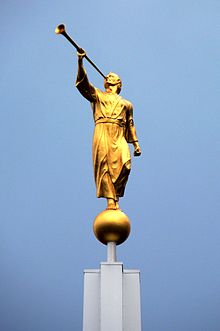
“It’s fate that I found you two tonight,” he said. “I know that you are prophets sent by Moroni and Heavenly Father. I have just come out of a meeting with people who plan to attack your meeting tomorrow, but I can’t talk here. If they see me talking to you, they will kill me. Please take me somewhere where I can explain. Innocent lives are at risk.”
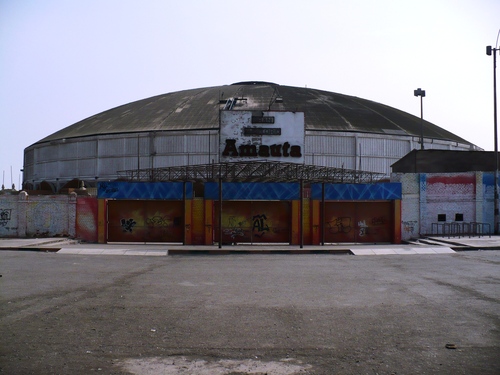 It was obvious he was talking about a regional conference that was scheduled for the next morning in the nearby Coliseo Amauta, a large event and concert venue in central Lima. LDS Apostle L. Tom Perry, one of the 12 living apostles of the LDS Church, had traveled to Peru to preside over the conference and we missionaries were pretty jazzed. Not only were we going to be able to see and hear directly from a senior Church leader, the regional nature of the conference also meant we could expect to run into friends and families from our previous areas.
Although my immediate thought was that he might be some kind of nut case, the dude looked sincerely terrified. Nuñez and I indicated that the man should follow us. We continued our walk back to the room we rented in the back of a local Church member family’s home as our jumpy friend followed a few steps behind.
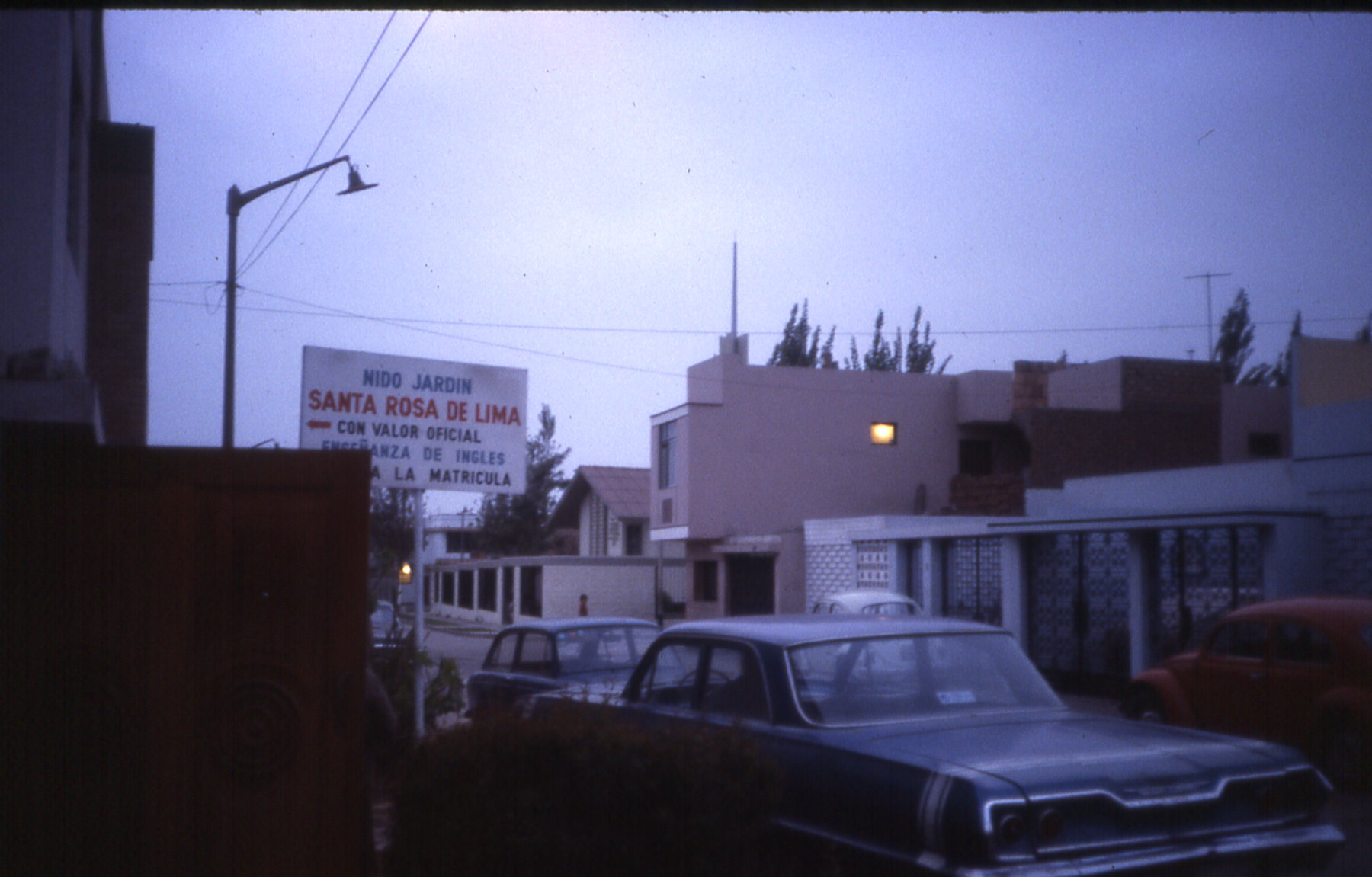
Elio, the section in Lima to which we were assigned, wasn’t a bad area in which to work. I actually thought it quite nice after having spent the first four months of my mission in poorer sections of Lima and the bleak southern coastal town of Pisco. Here, bordering the campus of San Marcos University, we had water 24 hours a day and seldom had to shine our shoes as most of the streets were paved. That night however, as we made our way along the last few streets before reaching our room, Elio seemed to harbor a secret menace. People staring out of their front windows seemed sinister. I was sure I could hear our new friend’s heart pounding behind us.
Once we entered our room and were safely hidden away from prying eyes, the young man appeared quite relieved. We sat him down on one of the unmade beds and asked him to explain just what exactly he meant when he said he was aware of a threat against the conference. He explained that earlier that evening he had attended a meeting of radical students who were planning to carry out an attack inside the Amauta. He said the students were members of a cell of the Sendero Luminoso guerrilla movement (known in English as the Shining Path).
“They know that your leader is coming from the United States tomorrow and they say they want to show that the Peruvian people will not accept imperialist gringo religions in the New Democratic Society,” he said, citing the well-known Sendero phrase. “I disagree with their plans but didn’t know what to do until I came across you two by chance walking in the streets. When I saw you, I knew I had to act because I know that you are sent by Jesus to bring the truth of the prophets to the people. I cannot sit back and do nothing while innocent people are murdered.”
 Our repentant terrorist went on to explain that he had taken notes during the meeting and he could give us all the details about how the attack was to be carried out. He said he even had the name of the security guard who was going to open up one of the gates early the next morning so the students could smuggle in the bombs and guns necessary for the attack.
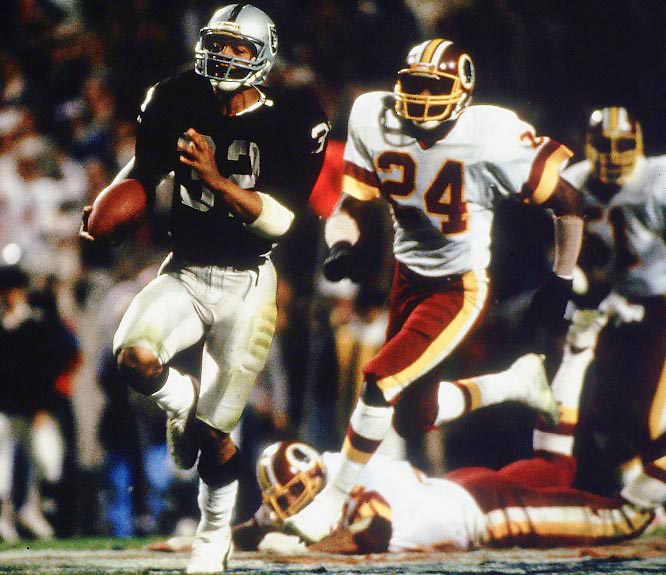
Nuñez suggested the man come with us to the mission office and give all the information to the mission president. He refused however, saying there was too much risk that he could be seen by members of the Sendero cell. He said he would tell us everything but it would then be up to us to act from there. I told him it was too much to remember and asked if he would mind if I taped what he had to say. He indicated no problem with the idea and so I slid the only tape I could find into my portable cassette player and hit record. While I was bummed to record over the 1984 Super Bowl radio broadcast my mom had sent me (Los Angeles Raiders over the Washington Redskins, 38-9), I knew the sacrifice was warranted.
This was incredible. Here was a member of a terrorist organization whose heart had been touched by the Spirit of the Lord. He was unwilling to allow violence to occur against an elect messenger of God and was being moved to take action to stop it. I couldn’t help but think how cool it was going to be to tell some of my missionary buds about this when I got the chance; they were going to freak…
The attack was to take place during the prayer that would open the conference. Three members of the terrorist cell posing as Church members would enter the building 15 minutes before the conference was scheduled to begin. They would take their seats at three predetermined points near the top of the arena. Exactly 30 seconds into the prayer, while the saints were bowing their heads in reverence, the terrorists would reach below their seats and grab the submachine guns that had been stashed there in the early morning hours with the help of the coopted security guard. They would then open fire randomly on the thousands of conference visitors while proclaiming “¡Viva la Guerra de Guerrillas!” (“Long Live the Guerrilla War!”). Once they had fired off a full magazine each, one of them would use a remote switch to set off bombs that had been previously placed under the stage. L. Tom Perry would be blown up along with a host of faithful saints unless we could do something about it.
We begged our young informant to reconsider coming with us to the mission office. Nuñez assured him that the Lord would surely protect him. But he continued to answer in the negative, saying he had to get out of town as soon as possible as he suspected his student colleagues would be looking for him once they realized he had disappeared following their planning meeting. He did want to ask one favor though. “You name it,” I responded sincerely.
He showed us the Bible he was carrying and explained that he wanted us to take it to his mother, who lived in the Pueblo Libre section of Lima. He asked us to tell her that he was truly sorry for all he had done to cause her sadness and to pass along that he was leaving the ranks of the Shining Path and would try to come back to her once it was safe. We accepted the Bible and the task happily and asked our beloved brother where he would go. He told us that his Uncle Pablo lived in Trujillo on Peru’s north coast and he would hide out there until things had cooled down. He then seemed to remember something and appeared troubled. In response to our queries, he explained that he would be unable to return to his home before leaving town for fear of being seen by his radical colleagues, but he did not have enough money to cover a bus ticket to Trujillo. As Elder Nuñez had already spent his monthly allowance and thus was broke, I was happy to give the young man 130,000 soles, or about US$50.
The whistle blower – who exuded deep calm after having gotten the terrible burden off his chest – asked if we could have a prayer. Nuñez suggested that the young man himself offer it and we proceeded to experience the most sincere and emotional prayer I had ever heard. We teared up as the young man asked Heavenly Father to bless his mother, we two “prophets,” and himself, a poor sinner, and beseeched the Lord to keep safe all the saints who would attend tomorrow’s conference. After the prayer we exchanged hugs of brotherhood and wiped our eyes. Our dear friend handed me the Bible with his mother’s address written inside and turned to leave.
Just as he reached the door he turned and, with eyes cast down, said that the worn clothes he was wearing were the only material possessions he would be able to take along on his trip north. He wondered whether either of us might have an extra pair of pants he could borrow. This frightened young man had just saved the life of one of the Lord’s chosen and countless others. A pair of nearly brand new Levis 501s didn’t seem too much to ask in return. I happily pulled the pants from a drawer and gave them to him. As he departed, I was sure that great things were in store for him. I imagined that Uncle Pablo was probably already receiving the discussions from Mormon missionaries in Trujillo.
Nuñez and I grabbed the tape and the Bible and ran the two blocks to Avenida Venezuela, the closest busy street. We stopped a taxi and headed for the mission office in San Isidro. Sitting in the back of that cab on our way to save the day, the Spirit hit me like a ton of bricks. I suddenly knew what it meant to have a true testimony of the gospel. In the back of the cab I was barely able to hold back the tears. I was finally experiencing the burning sensation in my chest that I had heard about since Primary. I knew at that moment that the gospel was true beyond the shadow of a doubt. The Lord had used me, an unworthy and rebellious missionary, to save one of his apostles. I would now be able to finish my mission with a new dedication. The Spirit would flow out from me as I testified to all that would listen that the Lord had restored his true Church upon the face of the earth.
Up until that moment and despite having accepted the calling to serve a full-time mission, I hadn’t truly had a testimony. What I had was just a sense of security based on years of Sunday School and Seminary. Sure, I had felt good at the Missionary Training Center when Elder Johnson told us the story about the night he had been praying for a testimony and at that very moment had heard someone whistling I Know That My Redeemer Lives outside in the hallway. And yeah, I had felt my heart pumping fast as Sister Garcia told us that she had seen my companion and me in a dream and we were walking with Jesus. But I had never actually personally experienced the sweet burning of revelation before. I had never before been so moved by the Spirit as I was in the back of that cab. There was only one way to describe the great joy I experienced; I rejoiced! I loved Elder Nuñez more at that moment than I had ever loved anyone outside of my own family. Peru was beautiful; the whole world was beautiful. Not to mention the fact that Apostle Perry, upon hearing of our actions, was sure to introduce us the next day at the conference and then maybe invite us out to dinner.
As it turned out though, saving the day wasn’t going to be especially easy. We arrived at the mission office just as a call came in that two other missionaries had wrecked the mission station wagon and were incarcerated in the Zárate jail. Despite our pleadings, our mission president didn’t have a lot of time to listen to our story or the tape. He told us to head to the home of Brother Sousa, who was in charge of security for the conference. We hurried outside and grabbed another taxi to the Sousa’s. Even though valuable time was passing, I felt secure that the Lord was guiding us and so didn’t worry. What was the point of our knowing about the attack if we weren’t going to be able to successfully stop it? God knew what he was doing.
We arrived at Brother Sousa’s home in Barranco, a neighborhood much like Elio, a little after midnight. Our hearts pounded as we paid the taxi driver and raced up the driveway to the front door. At the first knock, Brother Sousa opened the door and invited us in. He said that our mission president had called and told him we were on our way. He indicated that it must be important as missionaries were not usually out so late. I confirmed the seriousness of the matter as I handed him the cassette tape. “Just listen to this.”
 Brother Sousa plugged the tape into his stereo and sat back to listen. As our brave, repentant friend on tape explained how the attack would occur, Brother Sousa began to smile. “Honey, why don’t you bring these boys some of your delicious cake,” he called to his wife who was in the kitchen. “You Elders have done the right thing, now relax and have some cake and Sprite.” We were flabbergasted. What was he doing offering us a snack? Shouldn’t we be advising the police and getting over to the Amauta?
“Now boys,” continued Brother Sousa, “I don’t want you to feel bad but you two are the third set of folk I’ve gotten this report from today. It seems your young friend also told his story to a bishop and a stake president‘s wife also. Did he ask you for any money?”
I began to laugh uncomfortably while my companion sat there dumbfounded. I felt deeply embarrassed; I had given the fraud my new Levis. As I tried to feign a sense of humor while moving cake around my plate, I decided in the moment that it would be best to put off trying to analyze the experience – to include my taxicab Spirit witness – until a later date. Instead, I concentrated on the fact that I was going to have one helluva funny story for my missionary pals the next day at the big conference. I couldn’t understand why my total dork of a companion had begun crying; I had been saddled with such a boob. We’d been conned, that was all. Rather than being instruments of God, we’d simply been tools. Seeking for any deeper meaning right then didn’t seem the best path, shining or otherwise.
===============================================
Glossary:
companion: Mormon missionaries always live and work together in pairs. Missionaries refer to their assigned partner as their “companion.”
Elder: a level of Mormon priesthood; male missionaries use it as a title, as in Elder Nuñez. Female missionaries are referred to as Sisters, as in Sister Garcia.
discussion: Missionaries learn a set of presentations or lessons they share with people interested in the Church. These lessons are called “discussions.”
investigator: People that have shown interest in the LDS Church and are in the process of receiving the discussions from the missionaries are referred to as “investigators.”
Moroni: The angel who, in the 1820s, appeared to Joseph Smith, founder and first president of the Church of Jesus Christ of Latter Day Saints, and showed him where to find golden plates containing the engravings that were the source material for the LDS scripture known as the Book of Mormon.
Apostle: At the top of Mormon Church hierarchy is the First Presidency, made up of the President (or “Prophet”) and two counselors. Serving directly under the First Presidency are 12 apostles, who Mormons view as comparable to the original 12 apostles that followed Jesus.
“previous areas”: Missionaries refer to the places in which they are assigned to work as their “areas.” While it differs depending on the mission, missionaries are generally assigned to new areas roughly every 3-4 months over the course of their missionary service.
testimony: When a Mormon feels that he/she has obtained a special, personal witness of the veracity of the Church through the intervention of the Spirit, they call it having a “testimony.”
Primary: Sunday School for Mormon kids from 4-12 years old.
Seminary: Special religious studies for high school kids. Growing up in Utah, we actually got released from one school class period per day to walk across the street to the Seminary building for religious studies.
Missionary Training Center: Located near the campus of Brigham Young University in Provo, Utah. Missionaries headed to foreign missions spend the first two months of their service at the Center getting religious and language training.
Bishop/Stake President: A Mormon congregation is called a “ward.” Stakes are administrative zones made up of 4-5 wards. A Bishop is the leader of a ward and a Stake President is the leader of a Stake.
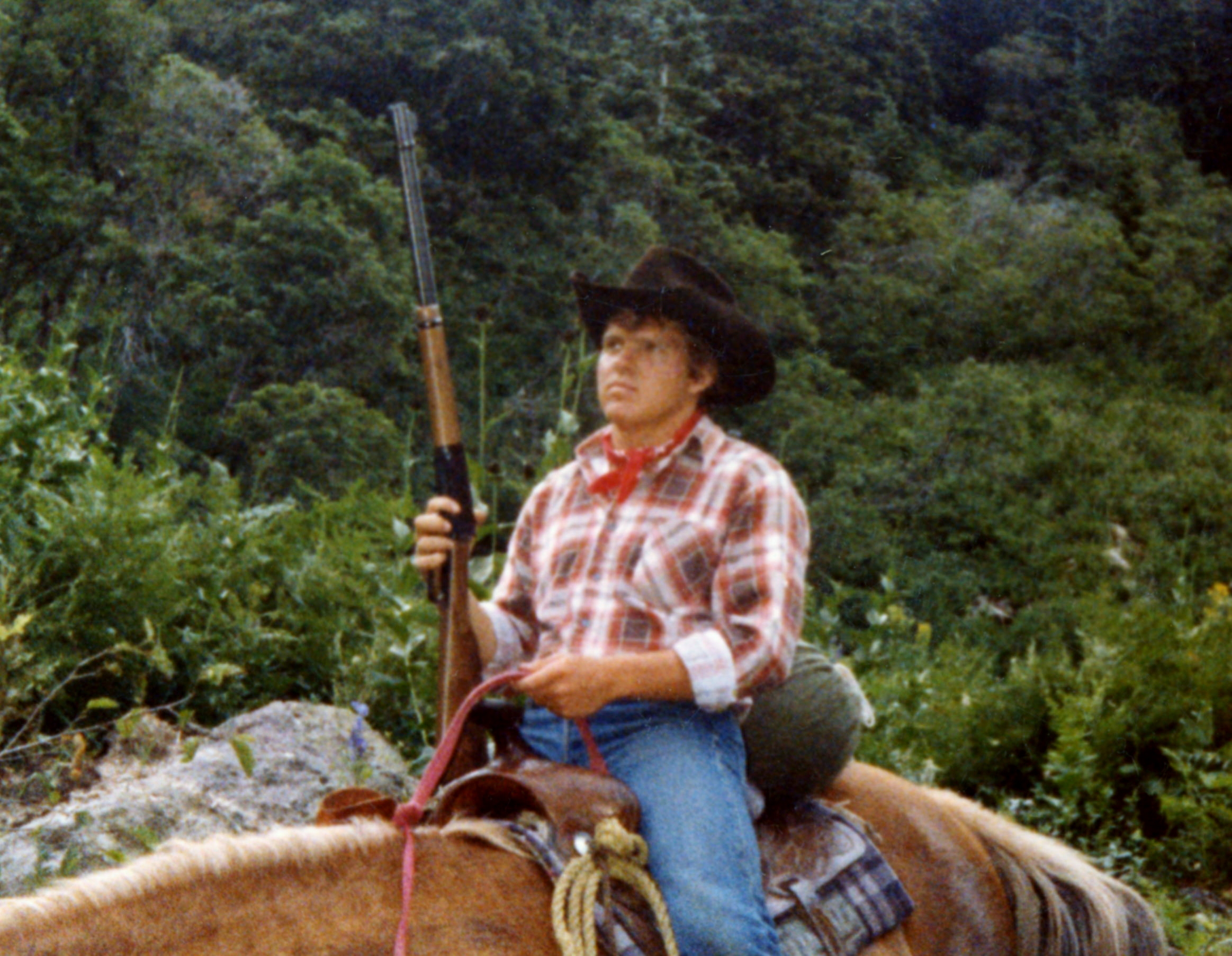
For a brief period growing up in northern Utah in the early 1980s I fancied myself a cowboy. I tooled around with old-truck-driving, Skoal-chewing, John-Deere-hat-wearing types; when it ran, I drove a 1956 Chevrolet 3600 3/4 ton long-bed pickup. I wasn’t the genuine article – as evidenced by the fact that I wore Levis 501s while my real-deal buddies wore Wranglers – but I sure tried. Boots, jeans, and plaid shirts were my normal attire, everything held together by a leather belt with my name embossed on it (a relic I still have somewhere although damned if it doesn’t fit anymore). Our hangouts included the parking lot of the Golden Spike Arena in West Ogden after the weekend high school rodeos, where we’d angle for girls wearing belts with their names on them, and the Tamarack truck stop out on 21st Street, where we’d drink coffee and play pool ‘til the early morning hours.
While I was mainly a headbanger in high school, with my cowboy buds I listened to a lot of country and western, with Chris LeDoux, Charly McClain, Sylvia, and Tanya Tucker being some of our favorites. Our appreciation for Chris LeDoux rested on his being, in our view, the most authentic rodeo singer of all time, an opinion bolstered by his having won the World Champion Bareback Rider title at the 1976 National Finals Rodeo. As for the other three cited artists, well, they were hot chicks who sang with sexy southern drawls and we were teenage boys.
A major music-related regret from those years was showing up for a Charly McClain concert only to learn she’d been snowed in at Denver and then deciding to get our money back rather than stay for an extended show by opening act Chris LeDoux. Chris was always putting on shows in Utah and I figured there’d be a million future opportunities to see him on the cheap. Unfortunately, I never did get around to seeing him live and, with his death from cancer in 2005, now I never will.
 Despite her celebrity, fame and hotness, I always thought of Tanya Tucker as a “real girl,” the type that you might see sitting in the stands at a high school football game or shopping for clothes at the mall. This was surely due in part to the fact that my stepdad told a story of having sold her a puppy sired by his purebred shepherd Herman; the details of how or when this would have come about are no longer clear to me but the idea that Tanya Tucker was a person who would get a dog from some regular dude in Utah made her seem pretty girl-next-doorish. When someone I knew and believed to be exceptionally cool then claimed to have “been with” Tanya (even if not in a field of stone), her “realness” was cemented in my mind for the long haul. The story went something like this:
Jeff was one of my buddy Matt’s older brothers. He earned our teen awe for being the one person we knew who had actually been on the professional rodeo circuit for a time, thus living the true cowboy life we all aspired to, and for having lost a thumb in a hunting accident. (I’m not sure why having had part of his hand shot off made him more awesome, but it somehow did; we were teenagers remember.) While always cool when we’d happen to overlap with him at the Tamarack, Jeff didn’t usually have much to do with us high school punks.
One night however, Jeff surprised us by sidling up to our table and buying us all a round of coffees and baked potatoes. Being an off night at the truck stop with few lonely ladies around for him to scheme on, I guess Jeff figured we were as good company as anybody to pass a few late night hours with. We took advantage of Jeff’s deigning to sit with us for the first time to bombard him with demands for details about his rodeo days, thumblessness, and other adventures, which he satisfied generously. We were rapt as he regaled us with tales of buckin’ broncos, but it was when he started in with the rodeo groupie stories that Jeff had us in the palm of his hand. We leaned in for more like bell-rung Pavlov’s dogs as each new yarn was spun.
The biggest highlight came when Jeff mentioned somewhat nonchalantly that Tanya Tucker would occasionally show up at a rodeo and then hang out with the cowboys afterwards at whatever local haunt they invaded. Jeff proceeded to confirm Tanya’s wild child reputation, describing how she could put away the booze and raise hell with the best of ‘em. He then went on to note having enjoyed a private audience with Tanya one night after cozying up to her in a bar. Despite our prodding he refused to provide more than a (relatively) gentlemanly review of the intimate performance.
Each of us created our own mental pictures to accompany Jeff’s narration – or at least I know I did – and truth be told, his decision to provide only a summarized overview probably contributed to higher quality imaginings than an actual blow-by-blow telling would have. Between the gifted potatoes, the brief attention to a few punk kids, and the tales of bad brahma bulls, that time with Jeff reinforced what we had already known; that he was super badass cool. In the end though, it was his firsthand confirmation of Tanya Tucker’s “realness” that elevated him to mythical status and served to sear his legend into our collective long-term memories.
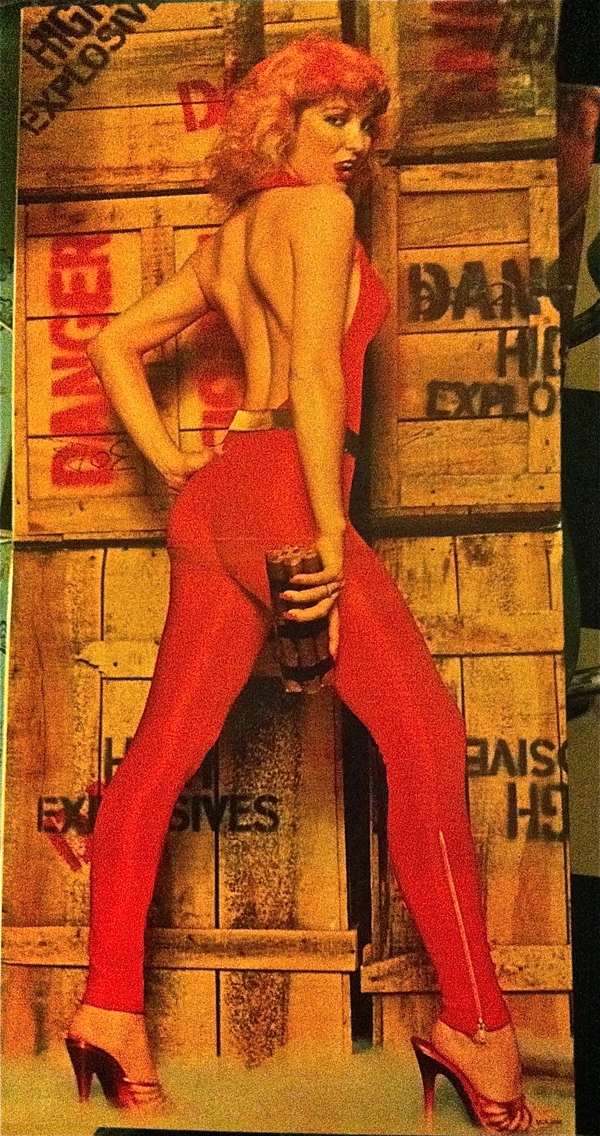
I continue to regularly spin my Tanya Tucker and Chris LeDoux discs (although Charly and Sylvia have slipped away from me). While her countrified songs appeal to me the most nowadays, my vinyl copy of Tanya’s more rocking 1978 “TNT” album remains a prized possession (see the LP’s gatefold picture above), likely manifesting leftover traces of my teenage self. It’s funny but even now when listening to her uniquely moving voice, I still think of Tanya as a real girl. Although I’m unlikely to run into her out and about here in Bolivia, I wouldn’t be surprised at all were I to hear that she’d shown up at some relative’s garage sale back in the States.

Everybody knows My Sharona and some may even remember the thrill of hearing the libidinous lyrics of Good Girls Don’t on the radio as a kid and wondering whether the adults simply didn’t get it. (To be honest, I’m not sure I had a clear grasp as a 15 year old of what exactly it might mean to have a girl “sittin’ on your face” back then myself.) If one or both of those songs are the full depth of your knowledge of The Knack however, I’d argue you are depriving yourself of the experience of enjoying one of the best power pop albums in the history of rock music. The Knack’s 1979 debut album “Get The Knack” was a massive success when it first hit stores, but the subsequent three decades seem to have condemned it to relative obscurity, save for the occasional appearance of My Sharona on a movie or TV show soundtrack.
Even if you think My Sharona is as deep as you want to dig into Knackdom, I’d urge you to pull it out or load it up and give it a renewed listen with fresh ears. Initially you’ll sing along and smile but probably not think much more of the catchy riff and earwig chorus since you’ve heard it a million times, but I ask that you force yourself to really pay attention starting at the 2:45 mark when the extended guitar solo kicks in. I doubt many think of My Sharona as a guitar hero song but listening to it again now at my behest you’ll have to admit that the minute and a half long six-string workout is easily one of the most well-crafted and skillful monster rock solos ever slipped secretly into a giddy pop song. Awesome!
But, don’t stop there. The whole album is filled with killer riffs, breathless drum runs, and pulse-altering bass lines, all tucked inside catchy-as-hell power pop tunes that get stuck in your head for hours if not days after just one spin. To my ears, there is a direct line from the feel-good rock & roll of Buddy Holly to these Knack songs, and not just because of the cover version of Heartbeat included on the LP. Oh Tara might rival Holly’s Maybe Baby as an anthem for all those teenage boys who have desperately but secretly loved some young beauty who never thought of them as anything more than a friend.
Oh Tara:
The playing on Get The Knack is tight and groovy. Beyond impressive pop sensibility, the members of the band really know how to play their instruments and, more importantly, how to blend their individual sounds into a greater whole. After the first few listens, try isolating the individual two guitar, bass, and drums parts in each of the songs. Each band member is busy throughout. The faster tunes are filled with endless guitar fills, constantly-changing bass lines, and strident drum runs that all seem to be equally high in the mix but somehow never overpower each other or take away from the sing-song verses and choruses that carve deep sticky ruts in your brain. (She’s So) Selfish, Let Me Out, and Frustrated all chug along like yapping poodles on speed and yet, when they’re over, you’ll find yourself mentally swaying back and forth like a lighter-waving hippy in the midst of a 20-minute Free Bird at a Lynyrd Skynyrd concert. The Knack somehow manage to rock AND groove simultaneously.
I admit I was one of the boneheads that killed The Knack. Like many (most), I bought the first album when it was new, spun it raw, and then never seemed to remember to try out any of the band’s subsequent output. I don’t know why. It may now be too late to, um, maybe pay a little attention as a way to repay The Knack for the 30-plus years of joy their first offering has given me, but I can at least keep waving the flag in support of that one glorious effort.
So, go get Get The Knack. There’s nothing guilty about this pleasure.



Hypocrite!
My young adult/teenage children probably can’t help but think of me as hypocritical when it comes to my active efforts to steer them away from drugs, alcohol, casual sex, and other parent-decreed ills. As they endure some grounding or other punishment designed to nip in the bud any early slippage or suffer through yet another overwrought, emotional lecture aimed at hard-wiring into their brains a knee-jerk aversion to the things I declare harmful, I imagine they immediately remember the numberless times they have overheard me happily sharing memories with friends (and even parents) of my own teenage adventures, laughing uproariously at the wackiness that ensued as I undertook many of the same activities I now hold out to them as sure one-way tickets to ruined lives. I’ve thought about and wrestled with my “hypocrisy,” often worrying whether I have somehow evolved into the blind, unfair Dad who just doesn’t get it that I never thought I’d be.
I have come to a realization recently however that has eased my concerns about having adopted a double standard with my kids. I now recognize that my stories and anecdotes are only humorous in hindsight; they are only funny because I stopped. The cheery nostalgia of my tales relies 100 percent on the fact of my having eventually changed my behavior. I stopped making bad decisions, or at least the particular types of bad decisions cited here, prior to suffering any of the potential horrible consequences I now so desperately want to protect my children from. Of course, I’d like to think I avoided unhappy outcomes because I was smart about my teenage stupidity, but as I reflect on friends and family who were not so fortunate, I’ve grown to accept simple dumb luck as the more likely explanation for my avoidance of grief.
I fondly reminisce about the creative and elaborate strategies employed by me and my underage buds to obtain beer on Friday and Saturday nights, and our determination to finish all of whatever we got our hands on because who knew when we’d be able to score more. But what about my own father who started imbibing young for fun, adventure, and to be “grown up” and ended up slipping into decades of alcoholism, lost years of close relationship with his son, and only finally recovered after converting to a religion called Alcoholics Anonymous and dedicating himself to multiple meetings a day and active proselyting for his new faith for the rest of his life. Or what about my sad grandfather who I so wish I could have known better but who died alone and drunk after spending a lifetime exacerbating his innate depressive nature by mistakenly trying to cure it through escape into a bottle.
I laugh about the day at age 13 or 14 when I sucked down an entire pack of Marlboro Reds while hanging out with an older, female cousin who smoked and who I thought was foxy and urgently wanted to impress. Aren’t kids silly? But what about my revered, expert hunter and fisherman, tattooed uncle who started smoking Lucky Strikes as a punk kid to fit in with the greased up, super cool 1950s Utah hoods and later with his Navy shipmates and who now labors to breathe thanks to the progressive damage inflicted on his lungs by the emphysema that will soon kill him.
What great stories I have about the ingenious schemes my younger self utilized to steal cassettes by my favorite hard rock artists from the local Grand Central store or to obtain partying money by refilling and reselling used popcorn and drink containers when I worked at the Orpheum Theater so I could pocket the receipts while still having a perfect inventory count at the end of the night. But what about my various relatives-in-law who were snatched away from their families to do prison time because it was such a simple matter to leave a few tires outside the Costco auto bay when they locked up at night so they could come back later to pick up and sell them on the side, or because it was just so damn easy to obtain credit cards with fake identities and then use them to buy all the cool stuff they coveted but couldn’t afford.
Man, we’d get excited when we were able to convince a few girls to join us for an unsupervised keg party at the house of some buddy whose parents had gone away for the weekend. Booze meant babes with lowered inhibitions, which coupled with our teenage male horniness, created what we thought was the perfect storm for making adolescent fantasies come true. And after that night when Vicki let me touch her boob at the drive-in, there was no doubt I was going to ask her out again. But what about my step-cousins who took on unplanned parenthood before they were old enough to vote or went through the trauma of an abortion while concurrently worrying about not failing tomorrow’s chemistry exam. Or, let’s consider my beloved female cousin whose rape while tipsy at a drunken youthful party couldn’t help but have contributed to her premature streak of grey hair and years of struggle as the single mother of two kids by separate fathers, neither of whom stayed around long.
My ’56 Chevy pickup modified to hold a Corvette engine kicked ass in the block-long illegal drag races we’d undertake regularly on or around Washington Boulevard on weekend nights whenever some douche bag in a hopped-up El Camino or Camaro erroneously believed his car was the shyte. Memories of avoiding cops and playing chicken through intersections to demonstrate that one did not mess with the “Bad ‘56” can still bring a smile to my face today in spite of my now knowing better. But what about my young uncle who died a horrific, fiery death, leaving behind two beautiful red-haired daughters, when he and another trucker decided to compete unnecessarily for the front position on a lonely, windswept two-lane highway in the vast emptiness of the mountain west.
I can’t help but feel kind of cool when I share with less-experienced friends and colleagues stories of my youthful experimentation with marijuana, cocaine, speed, and magic mushrooms. (Man, it felt like I was endlessly sinking into the bottomless abyss of my waterbed. Wild!) But what of my cousin whose similar “fun” experiments eventually led her to a not-in-the-plans crystal meth addiction that had her stealing from a trusting grandmother and inventing false stories of cancer diagnoses all in service of obtaining the necessary funds to feed her need.
In the end, I have decided I’m not a hypocrite; I’m just a father who deeply loves his children. I am extremely lucky that my youthful foolishness only left me with great, funny stories vice life-long hurt. I may not be able to keep myself from reciting or blogging them, but I can say without doubt that I would gladly trade away every single one of my romantic tales of “daring to be bad” in my youth if it would mean saving even one of my loved ones cited here their sad misfortunes. Going forward, I will continue to do my best, in my often ham-handed and imperfect way, to protect my children from the maybe-not-inevitable-but-still-possible consequences than can result from bad decisions, even if I myself happen to have been lucky enough to enjoy my stupidity cake and eat it too.
Please let my treasured children do as I say and not as I do.
The opening of the song Smoke on the Water by Deep Purple is included in almost any list of the best rock guitar riffs of all time. It is one of the first things most aspiring rockers seek to master upon picking up their first electric guitar and plugging into an amplifier. It certainly was for me, although like most teenagers I learned it wrong, plucking one note at a time rather than the two-note chords that guitarist Ritchie Blackmore had actually played on the original riff. The riff is so famous that it is often the subject of mass events, to include a gathering of 1,683 guitarists who played it in unison in Kansas City in 2007 to get into the Guinness Book of World Records. To think of Smoke on the Water solely in terms of Blackmore’s six-string prowess however is to give short shrift to the immense contribution to both the song and the riff by Deep Purple keyboardist and Smoke co-writer Jon Lord.
Listening to Smoke on the Water closely, one notes that Blackmore plays the renowned riff alone on guitar twice to open the song. The third time the riff is played however, Lord joins in on his Hammond organ and it is the combination of guitar and organ crunching the riff together that creates the depth and heaviness that we all remember when we think about the song. In fact, other than those first two run-throughs of the riff by Blackmore at the beginning, the guitar and organ always play it together throughout the rest of the song.
Lord’s impact on the song doesn’t end with strengthening the main riff though. His keyboard fills and flourishes can be heard high in the mix behind the vocals in each of the verses, creating the bouncy groove that propels the track forward. Even when guitar hero Blackmore launches into his awesome solo at the song’s three-minute mark, one can hear Lord’s organ joining up with Roger Glover’s bass to create the wall of sound off of which Blackmore’s carefully articulated notes rebound. A guitar song it definitely is, but it is Lord’s organ playing that gives Smoke on the Water its woofer-pounding weight.
I’ve been listening to a lot of Deep Purple since I heard the news that Jon Lord passed away on July 16th due to a pulmonary embolism, after a protracted battle with pancreatic cancer. Lord and drummer Ian Paice were the only two members of Deep Purple to be part of the group throughout the Marks I, II, III, and IV periods (as they’re known in Purpledom) that I personally followed and loved. Despite this, it was the other members of the group – guitarists Blackmore or Tommy Bolin, vocalists Ian Gillan or David Coverdale, or singer/bass player Glenn Hughes – that always popped into mind first whenever I thought of the band. Listening to the songs in response to news of Lord’s death however has caused me to refocus my attention and… Holy Damn!
I always recognized the presence of keyboards in Deep Purple. I knew at an intellectual level that the interplay between electric guitar and Hammond organ was the essence of Deep Purple’s sound. That said, I only really focused attention on Lord’s playing during his organ solos, which I always thought of as sort of spinning or cycling in and out from the vast openness of outer space. They sounded trippy in a cosmic sort of way to me, even when they rocked heavy as black hole gravity, but they were also always somehow interludes vice integral parts of the songs in my inattentive mind. After nearly 40 years of listening however, I finally “get it.” It’s just too bad it took the death of the virtuoso rock genius that was Jon Lord to set me on the path to the Hammond truth.
I now know that Jon Lord’s keyboards are/were the backbone of the Deep Purple. His playing is what made Deep Purple sound like Deep Purple despite all the line-up changes and regardless of whether the band was churning out prog/psychedelia suites in the late 60s, hard rock/proto-heavy metal in the early 70s, or experimenting with a little boogie/funk in the mid-70s. The organ solos are excellent but I now grasp that they are only a part of the Lord’s contribution to the music. He’s there behind every chorus, giving depth to each vocal, and stretching out the palette on which Blackmore paints guitar solo masterpieces.
I’ve included below one song from each of the Deep Purple eras that I made up a few sentences ago. I suggest first listening to each once through thoughtlessly, to simply take in the awesomeness that is the Deep Purple. The second time round however, focus your ears on Jon Lord’s keyboards and remember and mourn this massive musical talent that has been taken from us.
Blind from the 1969 album Deep Purple:
Maybe I’m a Leo from the 1972 album Machine Head:
What’s Goin’ On Here from the 1974 album Burn:
Rest in Peace, Mr. Lord


 Victim of the Fury