
My first twinges of hair envy came at the age of 10, predating my hard rock awakening by about two years. Our 4th grade teacher, Mrs. Liechty, used to allow a couple kids per week to bring in favorite records on Friday afternoons for show and tell. She’d play the songs on a portable phonograph at the front of the class and always share some positive opinion about each tune to reinforce the excitement of whichever students were lucky enough to be chosen that week. I remember the records played as mainly being the sugary pop of the day, with the occasional old Beatles or Elvis single from a parent’s collection sprinkled in. “Billy, Don’t Be a Hero” is one specific song I remember hearing in Mrs. Liechty’s classroom (as I previously described here).
While the boys leaned heavily toward novelty songs, such as Ray Steven’s “The Streak” (Boogity Boogity!) or Ringo Starr’s “No No Song,” the girls would bring in the latest offerings from the day’s teen heartthrobs. Via their record sleeves, mini-posters, and 45 rpm singles, Donny Osmond, Bobby Sherman, and especially David Cassidy were steady visitors to our class. We boys would whine and moan of course, mainly out of an adolescent sense that we shouldn’t like “girlie” stuff, but we could be found regularly humming the teen idols’ catchy bubblegum to ourselves after the final bell. What I most noted about the girls’ faves though was that they all had great hair; apparently girls liked wavy long hair! Prepubescent me would not have admitted a causal effect at the time, but I soon convinced mom to slow my trips to the barber shop.
CAUSE AND EFFECT?
(Donny’s hair, Bobby’s hair, David’s hair)
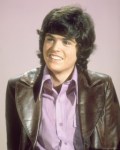
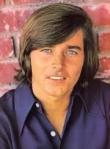
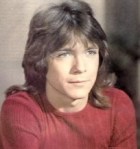
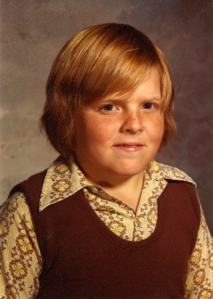
(My hair by the end of 4th grade)
When the KISS Alive! album planted my feet firmly on the path of hard rock righteousness two years later, I had no doubt that cool hair and cool music were fellow travelers. The good news was that I no longer had to actively banish the truth about my teen idol role models deep into the recesses of my subconscious. My eyes were opened to a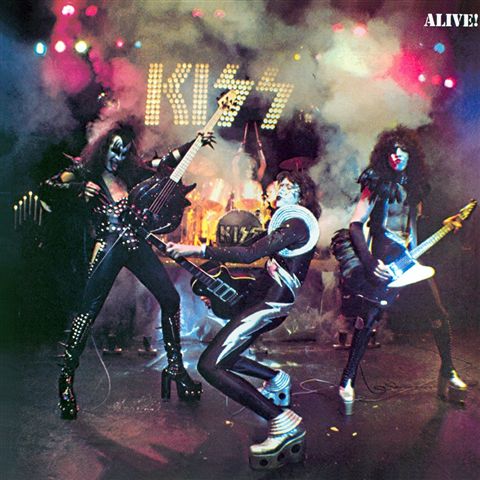 whole crowd of dudes who rocked out with their locks out, a much more manly set of mentors indeed.
My first hard rock hair idol was KISS’s own Paul Stanley, which his loose, curly perm. Head banging per se had not really been invented yet but I fantasized about having a thick mane that would bounce off my shoulders as I pranced around my room playing air guitar. I soon realized however that my fine blonde hair would never mimic the Starman’s dense tresses. Moreover, looking in the mirror and seeing how my head seemed to rest directly on my shoulders, I realized I’d never have the neck to pull off the long, straight hippy look worn by Thin Lizzy’s Scott Gorham either. I briefly considered throwing back to Ziggy-era David Bowie with his orange-red proto-mullet, believing that my Dutch/English genes could potentially pull it off. In the end I was too risk averse to make the attempt though as tying myself to Bowie’s androgyny was unlikely to go over well for me in conservative late-70’s Utah.

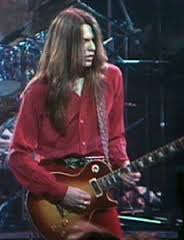

By my senior year in high school I had accepted my limitations and come full circle to embrace the style of my earlier icons, although I never would have publicly claimed them by then. The best of the few pictures I have of my hair glory days show me firmly in the David Cassidy camp, as evidenced below:

I brandished my “feathered” look up until I had to cut it all off to begin my Mormon missionary service in 1983. When I came back home in 1985, I tried to recover my style briefly but by then mullets had begun to reign and, unwilling to sign on to that folly, I soon sported a shorter cut, maybe halfway down my ears. When in 1987 a random Turkish barber in Washington D.C. parted my hair on the side vice the middle as he coifed me for the internship I was serving with a Utah congressman, my hard rock hair dreams finally perished for good. A misguided attempt a few years back to recover bygone days while working a 12-month stint in Afghanistan gave me a temporary thrill, but I realized soon after my return stateside that “feathered” didn’t go quite so well with “flab” and “forties.” As it is, I’ve no room to complain as I show no signs of gray or thinning even as I rapidly approach the big 5-0.
Regardless of how I might look in others’ eyes now, when I close my own and picture the true inner Victim of the Fury, he’s proudly displaying a lush swath that would give Donny, Bobby, or David a run for their money. And, truth be told, it’ll be their three photos that I eventually show to the genie when he shows up to grant me my three wishes.
===================================================
Don’t Look Ethel!!!

Source: http://images5.fanpop.com
Although I’ve tried, I can’t seem to get over my general aversion to the guttural singing style employed by a wide array of latter-day metal bands. I am not proud of this fact as I fully recognize that I am missing out on a lot of otherwise excellent music, and musicianship, as a result of my active avoidance of the deep-throated growls. More often than not however, I find myself unable to successfully listen below the vocals and/or mentally meld the vocals into the broader sound in order to fully appreciate what I’m hearing. Case in point, I recently gave up much of my library of Trivium tunes after years of attempting to listen through the growls. Those in the know will recognize that if I am unable to tolerate even the relatively mild gruff vocalizations occasionally employed by Trivium, I am self-selecting away from a wide swath of today’s most acclaimed and beloved metal bands and metal subgenres. As a result, I can often be found wallowing in self-doubt over my seeming less-than-fully-metal nature.
Occasionally, a gruff-voiced metal band will manage to slip magically through my taste defenses and garner repeat, delighted listens despite the harsh vocals. When the miracle happens however, my tendency is to employ mental gymnastics to explain it away rather than embracing the breakthrough. For example, I might convince myself that the vocals aren’t actually growls but are rather “shouts” in the manner of say, Pantera or Slayer. It turns out I’m ok with shouting. This scheme doesn’t get me very far though, allowing me to jump aboard with the mildest of growlers like Celtic Frost, Mastodon or High on Fire, but still holding me far removed from the extreme metal mainstream. A second strategy is to view the gruff vocals as solely one hue on a broader pallete wielded in the production of a larger masterpiece. This approach permits me to accept some harsher vocals without the need for protective re-categorization, but in practice only proves viable in cases in which a band employs an equal or lesser ratio of growls to clean singing. This is how I sign on for Therion, My Dying Bride, Nightwish, and The Devin Townsend Project for example, all of which reap their intermittent growls from a much larger, near operatic harvest.
My shame has been in no way assuaged by these limited, weak successes. No right-thinking extreme metaller would be tempted to front me entry based on my rationalized acceptance of the “safe” bands cited above. To date, with no Carcass, Cannibal Corpse, or Morbid Angel love to offer as evidence, my verifiable claims of headbanging allegiance have been generally limited to the ranks of the firmly non-extreme “old school,” “power,” and “heavy” divisions of the metal spectrum. To be honest I’ve even been tempted to begin self-characterizing as a “hard rock fan” and leave my metalhead aspirations behind forever.
But the times they may be a changin’…

I have discovered Kvelertak and they have shown me a new path. These Norwegian wizards have somehow draped their cookie monster barks in a wardrobe of such silky-smooth riffs and party-hearty grooves that even I cannot resist. I hear the growls and I embrace them like a teetotaler guzzling a Caipirinha, the sweetness of the fruity riffage overwhelming my aversion to its wicked companion. Unlike other extreme bands that leave me fantasizing about a non-alcoholic “instrumental” version that will never come, there cannot and should not exist a “virgin” Kvelertak. The band has succeeded in joining the harsh to the groove at a genetic level, creating a new species in the process. Any attempt to separate the abrasive from the reassuring in Kvelertak’s perfectly-melded concoction would surely kill the beast.
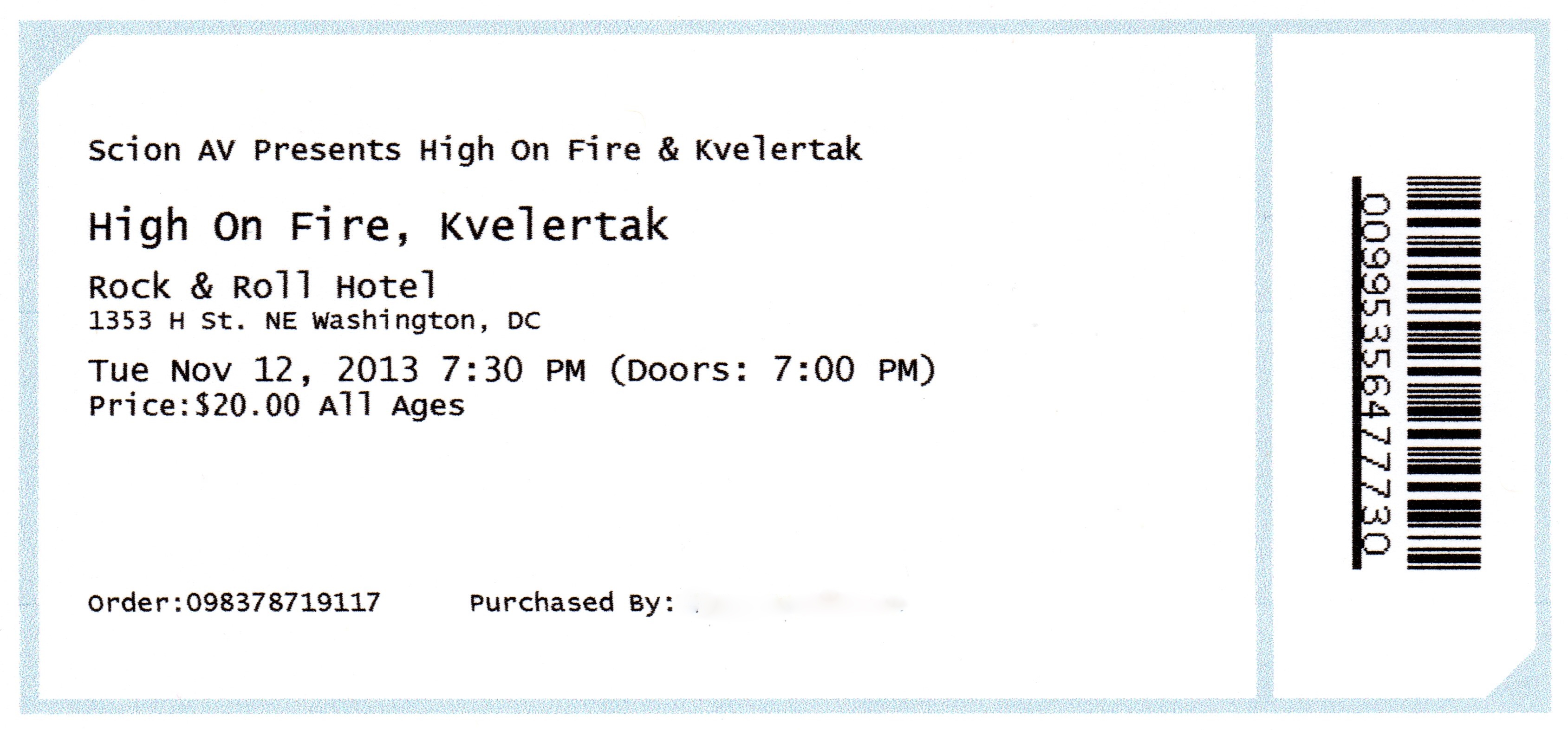
For you naysayers out there understandably unwilling to grant me credit for my previous toe-dipping, I respectfully suggest flirtation with a slight opening of mind. As it turns out, High on Fire was my gateway drug to this first successful experiment with full-on throat-shredding junkiedom. I first heard of Kvelertak just two weeks ago when I saw them open for High on Fire in the dank basement that is Washington DC’s Rock & Roll Hotel. From my perspective they blew away the headliner, so much so that I find my state no longer sufficiently altered by HoF alone. I’ll likely need to jump right into the hard Norwegian to get my buzz on from here on out. Yep, I’m that extreme.
How ya like my metal cred now?
Listening to anything other than religious hymns or classical music was strongly discouraged during my time serving as a Mormon missionary in Peru from 1983-1985. The idea was that other types of music — along with television, movies, and non-religious-themed books — would apart us from the 24/7 spiritual focus that we were supposed to pursue as full-time proselyting messengers of truth. My personal resolve as a 19-year-old to give up such worldly entertainments in compliance with mission rules barely lasted a month, as I found myself unable to relinquish terrestrial desires and fully embrace the celestial. As a result, my journal from that wonderful time offers up a nostalgic blend of sincere neighbor-loving piety and youthful exuberance, with any randomly-chosen page as likely to describe an excited visit to a movie theater or record store as to solemnly convey a touching conversion story.
It was through my rule-breaking rebellion that I discovered Lima’s 99 FM, then the city’s only hard rock radio station, and Patricia, the aurally-beguiling host of the Friday night heavy metal show. Immediately infatuated by Patty’s unique combination of sexy rasp and postgraduate-level metal expertise, I recklessly took her word for what was worthy of my auditory attention. It was thus that, in April 1984, after two weeks of build-up regarding Patty’s plan to play in its entirety a new album by, as she described them, a troll-fronted West German band that was pushing the heavy metal envelope to new heights, I couldn’t be blamed for feeling a bit of anticipatory frenzy when the appointed Friday night finally rolled around. As Patty dropped the needle on side one of Accept’s Balls to the Wall album, I pushed the record button on my mini boom box, closed my eyes and laid back to see where these vaunted Deutsche rockers would take me.
Album opener “Balls to the Wall” impacted me with the force of a V-2 rocket, its metaphorical bomb plugging itself firmly in my very own riff-loving ass. God bless ya, indeed! By the time a searing guitar solo screamed out just one verse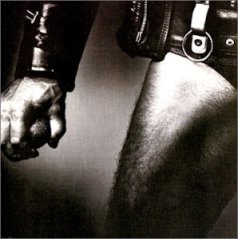 into the chugging, bass-driven second track “London Leather Boys,” I was ready to climb the highest tower to testify of Accept’s divine truth. Having never seen the in-your-face album cover, I was oblivious to what at the time was a sadly clichéd American puritanical reaction to the image and the album’s references to “balls,” “leather boys” and ass plugging, which were being decried as homoerotic evangelization. All I knew was that the LP’s fist-pumping metal pounders most certainly got my rocks off (figuratively, of course).
I carried that radio-taped copy of Balls to the Wall for the remainder of my missionary service and then home with me when I reentered the earthly plane in April 1985. Minimal finances and university studies kept me from much musical exploration for a while afterwards, and Accept eventually faded into nostalgia, even more so when I finally became a working stiff in the 1990s and dedicated the bulk of my limited discretionary funds to obtaining CD copies of already-owned vinyl LPs. Even the homemade tape of Balls to the Walls was lost in the course of a horribly misguided giveaway of all my cassettes in 1999 in an effort to reduce holdings prior to an international move. By the 2000s, when it came to Accept, I had all but apostatized.
Fast forward to 2011, when I found myself once again proselyting in the Andes, albeit this time in the service of a powerful secular deity known as the Government of the United States of America. Unexpectedly one day I was surprised to see a billboard 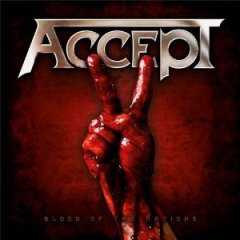 against the spectacular backdrop of the snow-covered peaks surrounding La Paz, Bolivia, announcing the imminent arrival of my forsaken Accept to offer a one-night only revival. The spirit enveloped me like a warm breeze and I knew I had to attend. Knowing nothing of Accept’s post-1984 offerings, I headed for the YouTube and discovered that the band had recently released an album called Blood of the Nations with a new singer and was on tour in Latin America in support of it. What I heard of the new tunes in my brief sampling sounded promising. I bought my ticket and impatiently awaited my day of reckoning.
The concert venue was a rundown cinema and there couldn’t have been more than 350 or 400 of us packed inside. How some bands manage to financially justify the convoluted journey up 13,000 feet from sea level to La Paz and its relatively-impoverished population I’ll never understand, although I support whatever fibs promoters are telling them to make it happen. On the other hand, it may simply be an act of charitable, mutually-inspiring love. There are few experiences like sharing a rock show with a group of high-Andes indigenous metalheads so thrilled to actually be visited by a “known” act that one could be forgiven for believing they had all somehow found nirvana en masse.
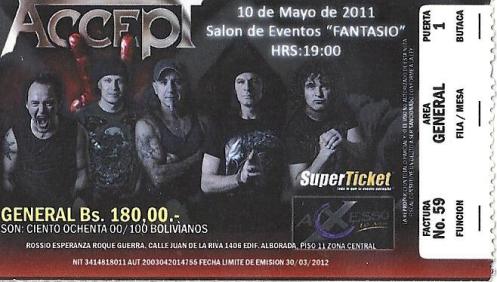
As Accept walked on stage to deafening cheers, lead guitarist Wolf Hoffmann took to the mike to announce that fellow guitarist Herman Frank had taken ill and would not make the show. He promised us however that the band would pull no punches and would deliver a rocking set, which they proceeded to do in spades. New singer Mark Tornillo deftly and powerfully handled both old and new songs, leaving nothing at all to be desired. Wolf somehow single-handedly covered all rhythm and lead guitar parts with a bludgeoning force that quickly made us forget the lack of the second axeman. In fact, more than anything else it was Wolf’s obvious and infectious joy as he banged out monstrous riffs and launched blazing solos that ensured our successful unified bum rush into the metal kingdom of God over the course of the night. By the time the long set eventually ended with a mammoth version of “Balls to the Wall,” I had once again fully accepted the gospel of Accept. My tithes flowed freely in the subsequent days as I sought to bring the Accept canon into my humble abode. The lost lamb had been found, not by the shepherd but by the Wolf, and the lamb did rejoice exceedingly.

I was able to see Accept again in April of 2013, this time in Santiago, Chile, in what was billed as the “preview event” on the evening prior to the 2-day “Metal Fest” I have written about previously here and here. This time Accept were touring on the back of their second album with singer Tornillo, called Stalingrad.* Once again, Accept showed themselves worthy of worship, proving to be my favorite show among nearly a dozen attended over the course of three days, to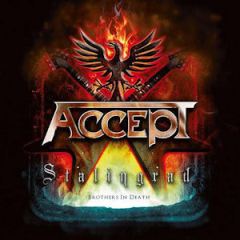 include other such notable contenders for omnipotence as Carcass, Twisted Sister, My Dying Bride, Symphony X, Morbid Angel and Sodom. This time, with both Wolf and second guitarist Herman Frank on stage and probably ten times the crowd size as compared to the La Paz date, the pearly gates simply spread themselves wide in welcome vice waiting for us to force our way in. Joyous Wolf again led the charge, his gift for striking exuberant, non-ironic metal poses as he wailed away a true vision to behold. My companions and I freely accepted the offered headbanging sacrament as we clung to the wings of the smiling demon angels that carried us to rapture.
I call on all who read my words to cast off the blinders, remove the motes from your ears, and simply Accept. Ignorance is not bliss, Acceptance is bliss. Drink of the Blood of the Nations. Make the holy pilgrimage to Stalingrad. And if ever blessed with a chance to hear the gospel of Accept in person, raise your wallets, plug your asses, and rejoice in the miracle.
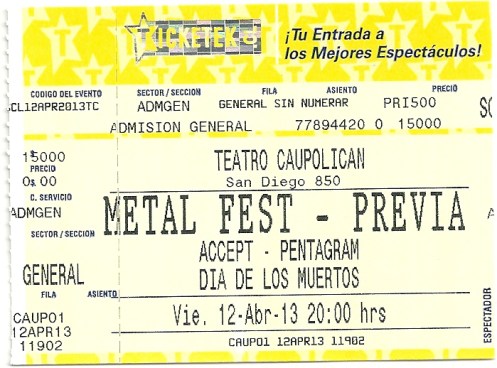
* At the time, they told us that the Santiago show was being filmed for an eventual DVD release. If it ever sees the light of day, it will serve as proof of my preaching.

Lou Reed’s earthly journey has ended and we are worse for it. I’m no Lou Reed scholar and can make no claim to being an especially dedicated fan, although I do own and greatly enjoy a few of his records. Even so, I have no qualms confidently declaring his parting a loss for the world. Individuals with Lou Reed’s ability to put resonating word to the foibles, deceits, trivialities, and everyday glories of being human are few. As a poet and wordsmith, he offered us unique views of ourselves through the vicarious observation of others. As a composer, he tailored seductive musical hosts to infiltrate those poetic object lessons into our consciousness. Lou Reed’s departure deprives us of new glances into the distinctive looking glass he set in front of us. We can nonetheless continue to learn from what he previously helped us to see.
I am a chorus of the voices*
While mundane in the retelling, I remember my first Lou Reed moment as epic. My first musical mentor Rick — about whom I’ve written before — invited 15-year-old me on a one-hour trek south from Ogden, Utah, to the more cosmopolitan Salt Lake City to visit the Cosmic Aeroplane, a record store (slash) esoteric bookstore (slash) head shop that I’d heard enticing ads for on late-night college radio. A generally sheltered kid, I felt exhilarated and illicit as I thumbed Aleister Crowley and browsed Ouija boards and glass pipes.
But the most memorable thrill came as Rick, me and a few others were independently flipping through the used record racks, each lost in the stupor of our individual searches for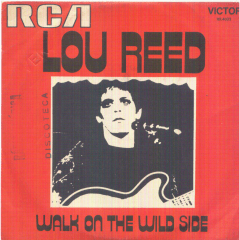 treasure. I was pulled from my LP-laden swoon by the sounds of “Walk on the Wild Side” wafting from the store’s speakers. Though it was then seven years old, the song was new to me.
The storytelling style of the lyric was easy to follow and drew me in. As Lou sang nonchalantly of transvestites and blow jobs, I looked around to see if anyone else was hearing it. Listening in the presence of non-snickering adult strangers felt grown up. I eavesdropped intently while trying to appear oblivious and indifferent, worrying that any blatant attention might cause someone to suggest lifting the needle in the presence of “the kid.” After a bit, I sauntered casually over to Rick and attempted to match the song’s matter-of-fact detachment as I queried whether he knew anything about that “wild side” song that had just played.
I am the truth, the beauty that causes you to cross your sacred boundaries*
I only scored my own first Lou Reed record six years later, an acquisition that brought mainly confusion. I had heard the song “Endlessly Jealous” on the radio and was immediately reminded of Lou’s ability to tell enthralling stories that oozed hard truth from their seedy grooves. I took advantage of a visit to Salt Lake to stop by the Cosmic Aeroplane and pick up Lou’s then latest album, 1984’s New Sensations.
Spinning the platter at home that night in the expectation of hearing dire 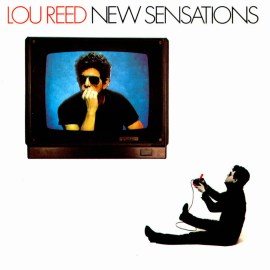 tales of urban ugly, I was confronted instead with a collection of relatively upbeat tunes about friendship, non-dysfunctional love, and the simple joys of watching a movie, riding a motorcycle and playing a video game. What the hell?!
After just one listen, New Sensations was set aside for more than two decades before an older, more-traveled version of myself was finally able to enjoy “happy” Lou. Along with the additional miles had come the realization that perceptive commentary on life did not by necessity solely spring from the lonely tragedy of human experience. It turns out insights and clarity could also be gleaned from moments of personal happiness and satisfaction. Who would have thought?
I attract you and repel you*
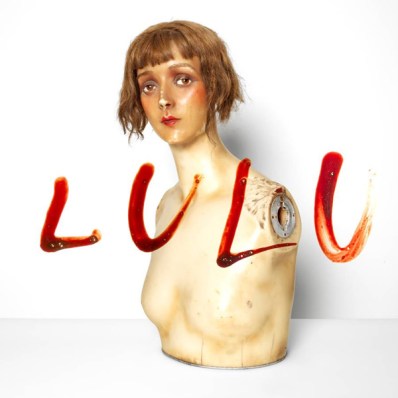
Lou Reed’s final public offering was the 2011 album Lulu, recorded in collaboration with thrash metal godfathers Metallica. The album concurrently suffered and benefited from the unique coupling that birthed it. The presence of Metallica surely brought more attention (and likely garnered the album greater sales) than any new solo Lou Reed release could have achieved on its own in the 21st century regardless of its content. On the other hand, the relatively larger pool of active buying and opining Metallica fans as compared to those more strongly drawn in by Lou Reed’s presence meant that the album was initially judged mostly on the basis of its place in the Metallica catalogue, and it suffered as a result.
It seems clear to me that Lulu is a Lou Reed record that just happens to have the added bonus — or interesting aside, depending on where you come to it from — of Metallica’s participation as Lou’s backing band. Nevertheless, the relatively more gargantuan Metallica P.R. machine inundated the build-up and eventual release of Lulu, resulting in what I would argue was its de facto, albeit misguided, launch as “Metallica’s latest” on which, by the way, some old dude unknown to most of Metallica’s dedicated faithful also participated. The commentary boards and blogs erupted immediately with confused diatribes on Metallica’s misfire, confused screeds that copulated like caffeinated rabbits, rapidly spreading their seed across the inter-waves. Lulu was thus doomed to widespread knee-jerk dismissal as the sheer volume of the noise overwhelmed the available space for objective personal experimentation.
I want to have you doubting every meaning you’ve amassed*
I like Lulu, and I arrogantly think others should too. I can distinguish a path from my favorite latter-day Lou Reed LP, 1982’s The Blue Mask, and most especially that album’s title song, onward to Lulu. I confidently argue that the unique Lou Reed craftsmanship of old breathes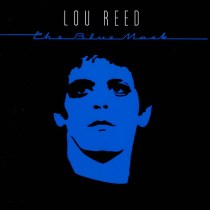 within Lulu’s ten tracks.
While I acknowledge that the astute and compelling observations on humankind are more difficult to suss out from the deeper compost into which Lou opted to sow them in 2011, I strongly sense them buried down in there. The continued dig feels worthwhile. And hey, that band Lou brought in for Lulu is actually pretty damn good.
It is time for the world to reconsider Lulu if for no other reason than because, let’s just admit it: what could be better than listening to a curmudgeonly grandpa rattle on about sperm, tits, and self-mutilation over the top of riffing heavy metal guitars turned up to 11?
* All quoted lyrics are lifted from the song “The View” from the Lulu album.

Working at the age of 15 as an usher at the Orpheum movie theater in Ogden, Utah, was my first serious employment. The job came after a stint as a paperboy for the Ogden Standard Examiner and a few weeks cleaning the downtown offices of a small local law firm. (The firm’s chief lawyer was famous for defending Ogden’s ultra-violent “Hi-Fi Shop killers,” who had shoved pens into the victims’ ears and also made them drink Drano.) Rumor was that the Orpheum was a tax write-off for the owner, who also owned the Standard Examiner, so he didn’t care about losing money. This resulted in his only bringing in second-run films he could get on the cheap. Crowds were few and far between.
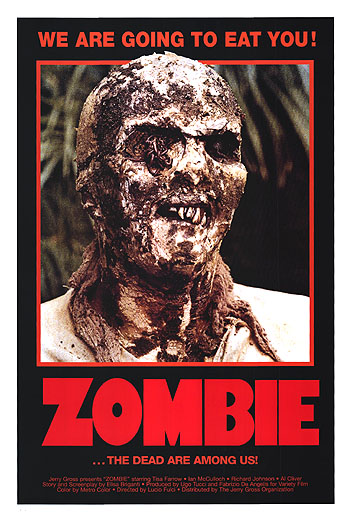
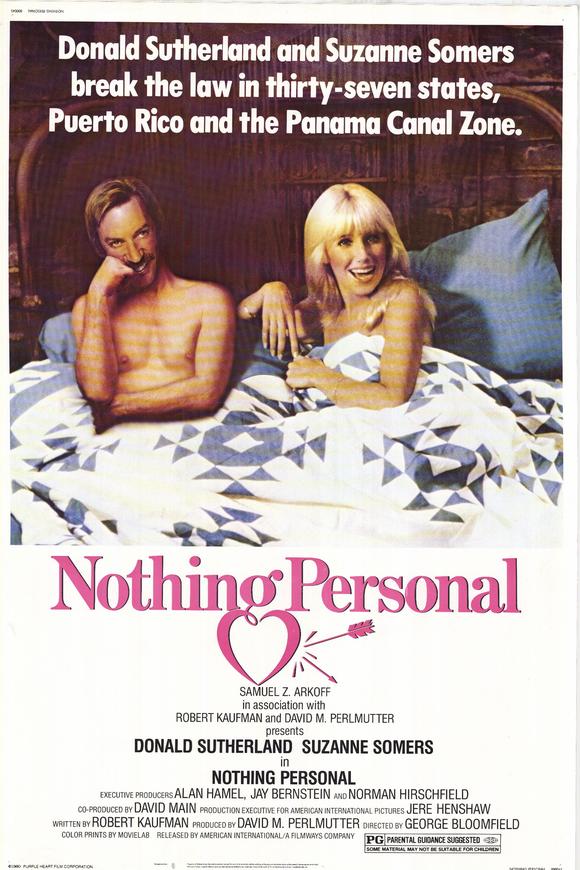
The only “new” movies I remember playing during my tenure at the Orphuem were: Flash Gordon (with the cool Queen soundtrack);The Nude Bomb (a Get Smart movie with the original cast); Zombie(best scene: a zombie battling a shark underwater); The Black Hole (a rare Disney misfire with Anthony Perkins and the voice of Slim Pickens); and Nothing Personal (a romantic comedy starring Suzanne Somers and Donald Sutherland that included implied cunnilingus!).



Our boss Les, the theater manager, was only 18 years old and spent much of his time bringing girlfriends into the manager’s office and closing the door for a while. We younger ushers all wanted to be Les when we grew up. He had long, wavy hair like Ace Frehley of KISS and told riveting stories from his other gig as an emergency medical technician for a local ambulance company. He was a teenage boys’ dream boss, letting us take Shasta sodas out of the pop machine gratis and hooking us up with the key to the video game machines (Space Invaders, Asteroids, Lunar Lander) so we could play for free while waiting for the last show to end. Not always a great role model however, Les also showed we underlings how to steal from the till without getting caught and was the person who talked me into my first foray into underage drinking, a guzzled can of Miller High Life.
Multiple other glorious teenage memories revolve around the Orpheum, many of them related to the 20-something ticket booth ladies and candy counter girls. There was Barbara whose Navy husband was off on a ship somewhere and who would spend hours telling me how she had fallen out of love with her sailor and lamenting her physical loneliness. There was also foxy hippie Nanette, who entered my fantasy true love pantheon for life by telling me I was her “favorite usher,” and who once secretly shared with me two niacin pills that made the skin over my entire body feel like it was on fire for about 30 minutes. Good times!
Behind the fun and youthful innocence at the Orpheum however, there was a lurking evil…

Separate from we minimum-wage-earning service workers were two union projectionists who ran the pair of 35mm movie projectors in the union-only booth at the back of the theater’s balcony. These better-paid specialists spent their time deftly splicing film and seamlessly shifting between projectors in accord with the upper right-hand corner blips that flashed on screen to signal the end of a film reel. We unskilled folk would seldom see the projectionists save when a call would come down asking that an usher bring up a box of popcorn and a coke. Otherwise, we’d only interact when the last remaining usher had to await the descent and departure of the projectionist in order to lock the front doors and close up. One of the projectionists was an older, nice-enough guy who said little and has left few traces in my memory. On the other hand, I remember projectionist number two, Ray, very well.
Ray was in his mid-thirties and was quite friendly. He’d make small talk for a few minutes on his way out the door at the end of the evening and seemed a cool dude. One afternoon in late ‘79, Ray invited me and another usher to his apartment for pizza. At his place, Ray regaled us with propaganda about the high-end audio cable he had either invented or had invested in that was going to make him rich.
At some point during the pizza-eating, Ray inquired as to whether I liked music. Then, as now, I was ALL ABOUT the tunes and answered him accordingly. He asked what bands were my favorites and I cited Aerosmith, Nazareth, and Rush, if I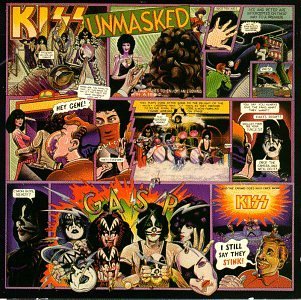 recall correctly. (By 1979, it was uncool in Ogden to publicly admit to being a KISS fanatic, which I most definitely still was at the time even despite the disco “I Was Made For Loving You” betrayal. Six months later, I would swear off KISS completely for roughly 15 years thanks to what I then viewed as the stink turd known as the “Unmasked” album.)
Ray asked whether I liked Devo. While I didn’t own any Devo at the time, I had dug their 1978 appearance on Saturday Night Live when they played “Jocko Homo” and their cover of the Rolling Stones’ “(I Can’t Get No) Satisfaction,” so I answered Ray in the affirmative. Ray happily noted that he had a good friend in Los Angeles who worked with Devo and offered to get me a signed LP if I wanted one. I, of course, wanted one.
In 1979-80, I was a sophomore at Ben Lomond High School. I wasn’t among the most popular kids at school but was not an outcast either. My friendships and social activities that year revolved more around my work life than my school life. That said, I was relatively aware of goings-on with my classmates and generally knew who was up to what.
Completely separate from anything related to the Orpheum – or so I believed at the time – there was talk at school of some weird old dude that a few kids would hang out with. Stories varied, but I remember variously hearing that the guy did everything from counseling a troubled youth with a messed-up home life, to providing drugs and booze to a couple of burnouts, to paying an all-American type kid for homosexual man-boy love. The freak, who for most of us was just a vague idea of a person we had never seen, was known as “Gay Ray” and, being teenage punks, we would often insult each other by suggesting that someone was one of “Gay Ray’s boys.”
As impatient readers may have already assumed, Gay Ray and Projectionist Ray were one and the same, although I didn’t discover it until sometime after the free pizza fandango/audio cable lecture at Ray’s apartment. Finally putting two and two together on Ray’s identity added up to a deep sense of foreboding for me. Within a short time however, the Orpheum was bought out by a regional theater chain that brought in its own projectionists, conveniently saving me from any continuing regular contact with Ray.
Roughly three months after the pizza fiesta and maybe five weeks after my Ray epiphany and the change in ownership of the Orpheum, I was called to the telephone while working one Saturday evening. It was Projectionist Ray on the line, animatedly giving me the news that my signed Devo album had arrived. He suggested I stop by his apartment that night after closing the theater to pick it up. Despite my discomfort, I wanted that friggin’ album bad, and so informed Mr. more-than-twice-my-age Ray that I would indeed pass by.
While only 16 by then — the early Spring of 1980 — I was nonetheless thankfully not a completely oblivious moron. After  hanging up with Ray I headed over to the candy counter to strategize with a couple of female coworkers. Working that night were fellow high schoolers Big Cindy (who I sincerely regret having referred to as Big Cindy back then, especially now that I am somewhat rotund of form myself) and super-babe Danae (who I once took out on a failed date and who had beautiful long curly blonde hair a la Nancy Wilson of Heart circa 1980). After explaining my situation and uneasiness, Big Cindy and Danae agreed to accompany me to Ray’s apartment after work.
When we arrived around midnight, Ray was visibly taken aback upon answering my knock at his door dressed only in a terrycloth robe and seeing the girls smiling there with me. Flustered, he mumbled something about just getting ready to take a shower and told us to step in and wait in his living room while he went into the back. He came back out with an LP-size cardboard box addressed to him and showing a return address from Warner Records in California.
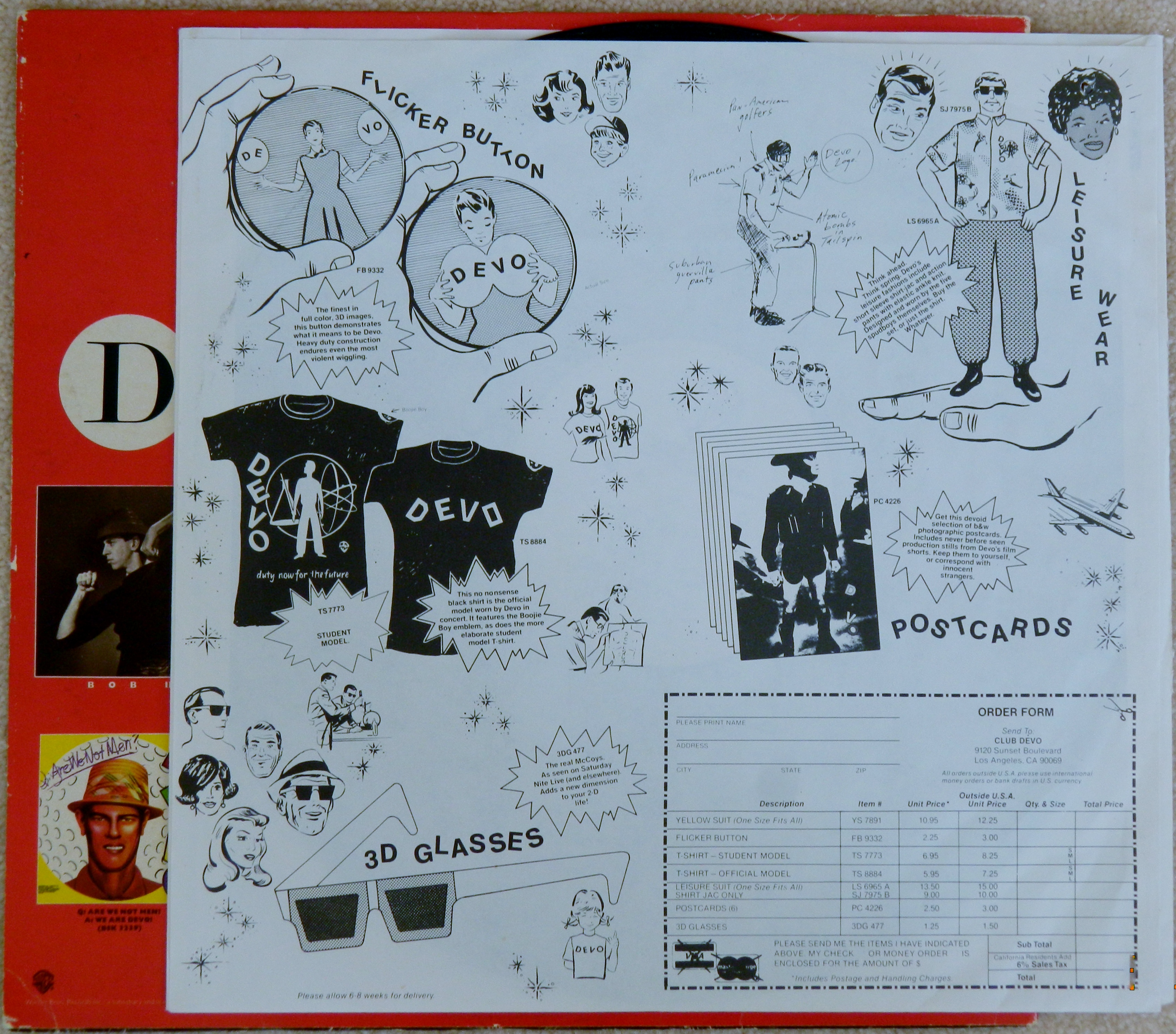
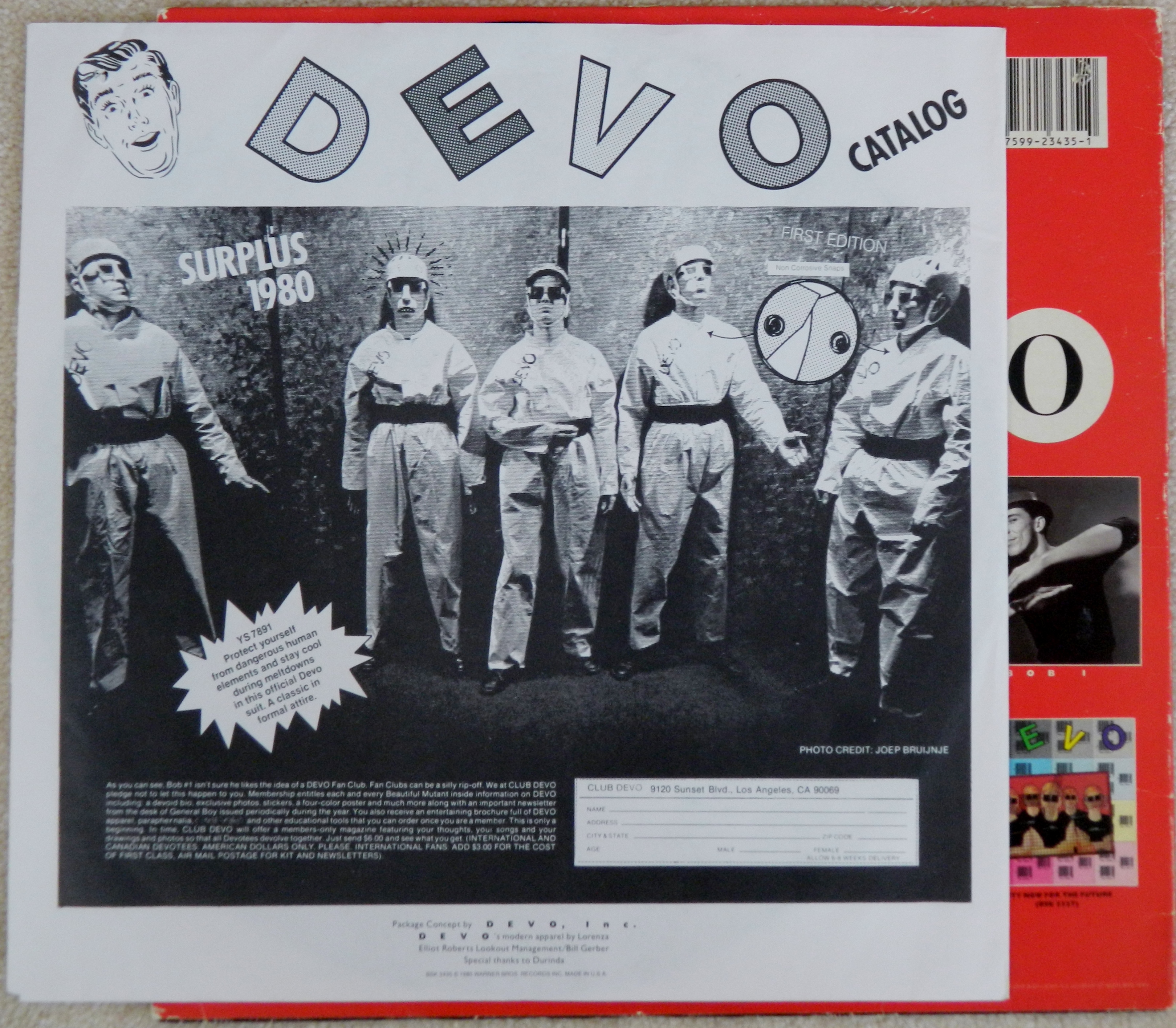
Awkwardly handing me the package, he suggested that I go ahead and open it. Inside, I found a letter to Ray from his record company buddy expressing hope that Ray’s “young friend” would like the gift — the memory of the letter gives me the willies in hindsight — along with a copy of Devo’s Freedom of Choice album autographed to me personally by all five members of the band. Mark Mothersbaugh had even added a tidbit of advice: “If it wiggles, splice the tips together.”

Giddy with my score, I thanked Ray sincerely, although he didn’t seem overly pleased by my gratitude. Ray took the letter for himself, mentioned the late hour, and escorted the girls and me out the door. As we got back into the car, I remember Cindy saying the experience had been “gross” and all of us agreeing that my bringing the girls along had been the right move.
I only vaguely remember ever seeing Ray once more. I’m not sure where or when it was exactly — he might have come to a movie at the Orpheum — but I do clearly remember him asking me why I had brought Cindy and Danae along with me to pick up the album. I think I answered that we had stopped by on our way to a party. I later heard that one of my troubled high school peers long rumored to have been a regular visitor to Ray’s committed suicide in his early 30s, although I never heard why. My younger sister tells me that Ray did eventually set up his own audio cable company.
===============================
The Orpheum was torn down in the mid-1980s, replaced by a city office building. The autographed Devo LP has been mounted behind glass since about 1998 and still hangs proudly on my den wall. The tunes from the album come up on shuffle on my iPod on occasion, with the songs “Girl U Want,” “Freedom of Choice,” and “Gates of Steel” being my favorites.
I’ve come to possess much more Devo since getting Ray’s gift and actually like the first LP, Q: Are We Not Men? A: We Are Devo!, the most. Nevertheless, the Freedom of Choice album will always hold a special place for me; depending on your viewpoint it serves as a remembrance of either how I was willing to risk my innocence to obtain a cool record or how I manipulated a poor, lonely pervert for my own benefit. Either way, the experience would seem to support Devo’s de-evolution concept, defined on the band’s Wikipedia page as “the idea that instead of continuing to evolve, mankind has actually begun to regress, as evidenced by the dysfunction and herd mentality of American society.” Whip It, indeed!



 Victim of the Fury