
People are often idiots, and unfortunately, on 28 October 1981, people included 17-year-old me. That was the night I saw the young, soon-to-be massive Def Leppard in concert and could not be bothered to care.
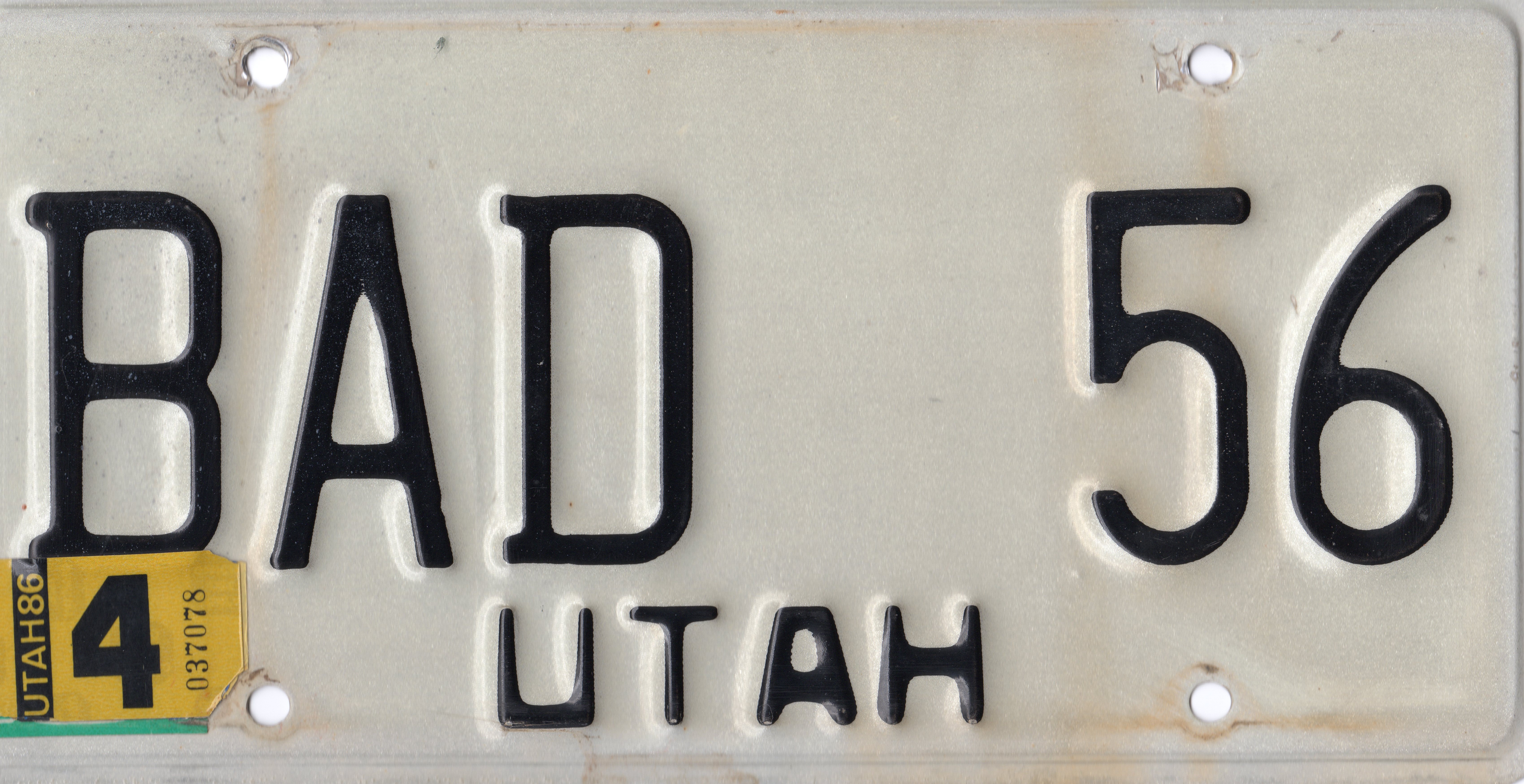
My buddy Gary and I were pumped to go see Blackfoot as I drove us from Ogden to Salt Lake in my hopped-up 1956 two-tone (brown and tan) Chevy pick-up with heavy duty springs on the back that made it sit way forward and the 350 V-8 engine — with overhead cam and a four-bolt main, whatever the hell that meant — that had been pulled out of a ’69 police cruiser. We were blasting “deep album cuts” on FM 99 radio through the 100-watt speakers that sat tucked away behind the saddlecloth-covered seat mounted in wooden boxes custom made for me by my friend Scott in shop class. As we flew along the freeway with the windows down, we had no doubt that we were living up to the claim made by my ride’s personalized license plates; we were definitely the “Bad ’56.”
Just outside Bountiful however, our buzz got harshed big time when a loud clank was followed by my bad-ass ¾-ton Chevy limping its way over onto the shoulder before it proceeded to stall completely. It would turn out that I had thrown a rod and destroyed the motor, but I didn’t know that at the time. All I knew was that Blackfoot were set to southern rock the mountainwest in less than two hours and we were screwed.

My 1956 Chevy 3600 3/4 Ton Pickup – “Bad ’56”
Despite the setback, Gary and I had three things going for us that would save the day. First, in those pre-cellphone days, the truck had given up the ghost within a short walk of a gas station with a payphone. Second, it turned out my parents had already gone to Salt Lake earlier that day to visit my grandparents and were only about 7-8 miles away. And third, I had a stepdad and grandpa who, while they couldn’t have given two turds for my beloved hard rock, were nonetheless selfless men who took pity on dumb-ass teenagers who routinely got themselves into fixes.
Within an hour, stepdad and grandpa had come to the rescue with two more trucks – with functioning stock engines vice souped-up jerry-rigs – and a tow rope. With fed-up head shakes and pissed-off grumbles, the two much-loved grown-ups sent us idiot kids off to our rock and roll malarkey in one truck while they stayed behind to tow the now differently bad ’56 to the shop. Gary and I made it to the Salt Palace with only minutes to spare and settled into our reserved seats ready to rock.
The opening band, which we had never heard of, came onto the stage and started to jump around like jackrabbits to the tune of some apparent greeting song with a repeated chorus of “Hello America.” The singer was wrapped in a huge flag and appeared to have just mainlined 10 cups of weak American coffee. When the front man finally tossed aside the stars and stripes, we saw that he was wearing tight spandex trousers and Union Jack-bedecked sleeveless T-shirt and high-top basketball sneakers. He shrieked and screamed “Woo!” a lot and led his band of skinny lads rapidly through seven or eight songs in what seemed to be an amped-up effort to finish the set and get offstage as quickly as possible. I remember thinking that the band members looked really young, like around my age, and that seemed wrong to me somehow. How could these punk kids with their too-fast, too crunchy music be on the same stage that the glorious Blackfoot would soon own?
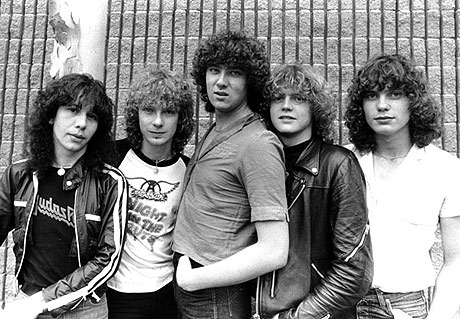
Def Leppard (punk kids)
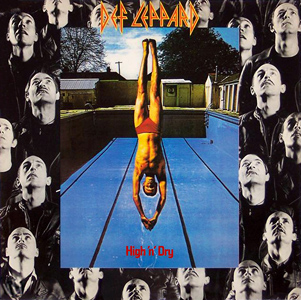
I don’t remember a single song played by Def Leppard that night other than the opener. They were touring their 1981 album High ’n’ Dry, which would end up regularly played by my friends and me as we dragged the boulevard the very next spring and remains my all-time favorite Leppard LP. But on that 28th of October, I just wanted this crap band out of the way so the real show could begin. As it turned out, I don’t think I was the only one in the crowd that cold Salt Lake City night that couldn’t be arsed. I remember plenty of boos, although I guess the folks could have been yelling “Doo-eff Leppard.” What I’m sure of was that there was no encore, nor even minimal call for one. Idiots, the lot of us. Man, if I could go back in time… what kills me most is that they probably played what would become my most beloved Leppard song, “Mirror Mirror (Look into My Eyes),” while I inattentively scanned for scantily-clad groupies and pined for some southern boogie.
Mirror Mirror
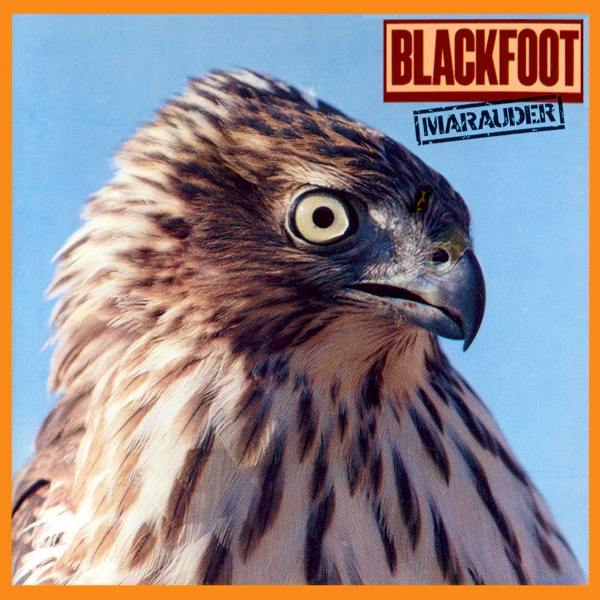
Of course, it is only in hindsight that the concert was not all it should have been. The mighty Blackfoot thundered like a marauding herd of buffalo, fitting as they were touring 1981’s Marauder album. I most recall singer/guitarist Ricky Medlocke and bassist Greg T. Walker towering over the stage that those doofus English kids had previously unsuccessfully tried to fill. Highlights were the grooving “Every Man Should Know (Queenie)” with its lyric for the ages ”You mess with my honey / I’ll mess with your face” and a blistering extended live take on “Highway Song.”
Highway Song
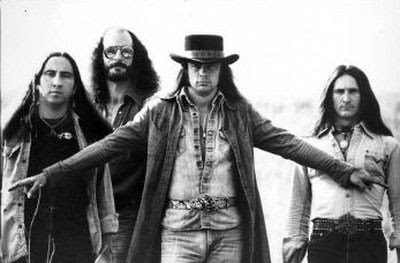
Blackfoot (Not Punk Kids)
The ’56 Chevy was never the same. It went through three engines over the course of the few years I had it; rod throwing was apparently my thing in the early ‘80s. Roughly 15 months after the Blackfoot show, the Pyromania album made fools of all of us who had dismissed the crappy opening band and launched Def Leppard into the teenage Utah stratosphere as if propelled by a Thiokol-built rocket booster. As for Blackfoot, Marauder ended up being the last of their releases deemed worthy of my “discriminating” juvenile palate and I unceremoniously moved on.
Maturation, personal evolution, and developing openness to new things are wonderful processes all, and I’m glad I’ve since learned to want to give stuff a chance. Nonetheless, I’d gladly pay you Tuesday for a time machine today that would carry me back to that October night at the Salt Palace so I could tell my punk self to please turn around and listen!!

You’re in Karachi now / Oh, oh you’re in Karachi now.
– Kamila Shamsie, Kartography
One week short of 90 days, which will mark a quarter of the way through my Karachi era. I had a long-distance feedback session over the phone with the boss today. He said I was amazing, doing amazing things, and that my locksmith was an amazing example for someone else’s river dance. He was especially glad that, when we have an issue, we chat it out, which apparently is also “amazing.” He’s a well-meaning, sincerely good guy; I bristle at his management.
I’m back on the treadmill for an hour every day. That means I’m choosing and listening intently to about an album and a half each evening, as opposed to my usual random shuffle. I enjoy the album experience. It reminds me of stuff, channels my mental wanderings, and calms me even as it juices me up. It is a nice change from the bouncing thoughts I normally host. While treading, I contemplate stories I should tell, phrases I should write, wholesale life changes I should undertake, and mix tapes I should birth. If I were to follow up on even half of my treadmill plans, I’d most certainly, um, do a lot more stuff than I normally do… and that would be cool and I would be happier.
I’m reading a lot. I’m keeping a list. I am currently slogging through a Japanese novel about a wandering ronin; I found it on a shelf here at  the house. It’s called Musashi, was written in the 30s, takes place in the 1600s, and is apparently well-known and beloved in Japan. A thousand pages of honor, samurai codes, and the “way of the sword.” I find it hard going, but having a few close friends and a multitude of colleagues who think about honor a lot, I want to find my way into it and so keep plugging along. I personally have no code beyond the one embedded in my head that causes me to constantly fear being deemed a failure or to be discovered to be the charlatan I “know” myself to be. Codes are a bitch.
Here’s my favorite quote from the book so far. It is a statement by a greedy, detestable merchant and is offered up as an example of the decadence of his class, but for me it rates as part of my fantasy gospel:
“I feel sorry for them; they’re so busy thinking about their honor and the warrior’s code they can’t ever sit back and enjoy life.”
I eat Pakistani food at the cafeteria every day. Biryani Friday is my favorite, and I’ve become a big fan of the various versions of spiced lentils offered up regularly. Breakfast is a either a packet of flavored oatmeal, a bowl of bran flakes, or a plate of fruit. My three-day-per-week house boy peels and pits oranges, slices apples, kiwi, and strawberries, and cuts grapefruits in half for me. He also irons my shirts, changes my linens, buys my milk, and washes my dishes. I never see him. He arrives after I leave and departs before I return. I think he sometimes uses some of my toiletries. Dinner usually comes from a can, soup or chili mainly. Ramen with tuna mixed in has been a big hit for me also, as has two eggs over easy with white toast. I mostly drink water with drops of lemon juice from a bottle I found in the fridge when I moved in. When the lemon juice runs out, I’m going to try the bottled lime juice also left behind by the previous tenant.
Violence is constant in Karachi. Stories of tortured false-worshippers, gang wars, buried-alive neighborhood punishments, targeted killings, and exploded law enforcers fill the news. I could throw a rock at it if I did a bit more to build my arm strength, but it might as well be on the moon from behind my enclosures, both physical and cultural. Dirka dirka Muhammad jihad. Illusions of nipping down to the club to bang my head with the locals have ebbed.

Paintings of swords and falcons, along with pink and green tassles, adorn every bus and truck I fight for lane space. Mustachioed guards slather on more perfume than a Utah grandmother. Women ride side-saddle on the back of tiny motorbikes in deference to some moral guideline that says safety is ok only as far as it doesn’t involve straddling anything, or anybody, in public. In the meantime, the Bollywood belly-dancers in the Indian movies constantly shown on local channels gyrate so seductively that lonely geographic bachelors can sometimes find themselves temporarily enthralled despite an inability to understand the nuances of the Hindi/Urdu dialogue.

I have a down comforter, a foam mattress pad, and a “cooling” pillow. My bed is intensely comfortable. The 5:30 AM call to prayer from the mosque on the far side of the park behind my residence awakens me every day now that I had my air conditioning serviced, making it both colder and quieter. Tonight I’m putting the dehumidifier on full in hopes of sleeping through the exotically beautiful, warbling, damnable chants.
My wife and kids are good to me. They keep me informed and loved from afar. I keep them counseled and instructed, for which they forgive me. “Adamant” is my new favorite word for describing myself. I am overly adamant.
When I age and my mind starts to dement, I ask that any caregiver or loved one sticking it out with me be kind enough to strap the headphones on me, hit “shuffle all” on my Pono music player, and let me rock while I drool. Prior to his recovery, an alcoholic I know once told me he was afraid to stop drinking because he expected to visit France in the future and could not abide the thought of foregoing a glass of wine while there; the idea terrified him. As I enter my second half-century, my own ridiculous-but-nonetheless-desperately-real fear is that one day I will become unable to listen to my tunes. I can’t sing, I can’t play, I can’t compose, but damned if I don’t boast a world class talent for listening. I may well eventually be outed as an impostor in every other aspect of my existence, but in my capacity to escape into music I harbor no self-doubt.
Beware the ides of March.
Change can be good, but to paraphrase my all-time favorite Meat Puppets song “That’s How It Goes,” sometimes:
‘change is a problem and I’ll be resistant.’
After a roughly four-month transitional stay Stateside, I recently completed a radical geographic shift from La Paz, Bolivia to Karachi, Pakistan. As can be imagined, my life has changed significantly. I’ve gone from residing happily within the warm and loving embrace of a family unit to living alone in an isolating bunker-style home, a result of security concerns that mean loved ones do not accompany folks assigned here. I’ve moved from the distinctive but welcoming Andean highlands that oozed a National Geographic sense of connection with the past and where I spoke the language, to a foreign-tongued, modern urban port mega-city of 18 million that initially appears too harried and preoccupied to throw its arms wide for yet one more interloper. I’ve shifted from a carefree, all-hours sense of freedom to embark on a whim to explore as nonchalantly or intently as I saw fit to a calculated existence where each movement is carefully considered to avoid patterns and weighed for relative potential risk.
To avoid giving in to my innate hermit tendencies, especially in the face of this oftentimes overwhelming change, I am not surprisingly counting on music to keep me rooted and eventually provide the path that will allow connection and sense of belonging here. In Bolivia, I was successfully able to plug into the local heavy metal scene with its reassuring sense of devil-horned universality and togetherness. While I harbor no illusions about the relative challenges inherent to doing the same here in Karachi, I nonetheless confidently declare the goal: I shall seek out and touch this land’s metal.
There are positive omens. I have found online reviews of metal-tinged “Battles of the Bands” held here in Karachi and confirmed the existence of Wikipedia, Facebook, and other social media pages for scores of Pakistani metallers. In fact, as I type this I have the promising sounds of Islamabad-based band Qayaas streaming via Sound Cloud. At first squint, they seem an interesting mix of Soundgarden and Alter Bridge. Also boding favorably, the other day I spied one young lad sporting an Iron Maiden-patched denim jacket as he held on for dear life within the fire-ant swarm of motorbikes inundating the city’s streets.

Love, Peace and Metal (by Violet Stardust)
http://www.deviantART.com
A few interviews with Karachi headbangers I have found online emphasize quotes about the local metal scene being a counterweight to the misguided idea that all Pakistani youth are terrorist fundamentalists. As is the case globally, even practitioners of the most extreme black, death, and grindcore metal genres here strive to preach community and acceptance as the pillars of shared metal fandom. As such, I have little doubt that once among my musical fellow travelers, I will find calming safety and warmth. The fact that the local metalheads feel compelled to repeatedly cite themselves as bulwarks against terrorism however plainly evidences the obstacles my ginger-bearded self will need to negotiate before successfully banging my head in the bowels of some dank underground Karachi metal club.
It’s sure to take some time, but the eventual realization of my Pakistani metal quest should merit an epic post or two somewhere down the line. In the meantime, I’ve got my entire music collection in digital form, my e-book reader, and a treadmill to ease my overactive resting-state brain during the limited down-time hours and to keep me from sinking too deeply into a mire of lonely self-pity this far world away from the beautiful spouse and children for whom my metal bell tolls.
One of the downsides of having a large music collection is that I sometimes inadvertently overlook excellent albums for years as shiny new obsessions and old faithfuls compete for my attention. On the other hand, that is also what is so great about having an extensive collection. There is real pleasure in rediscovering some fantastic “lost” album among my own stacks. Occasionally I’ll force myself to look through the shelves for something I haven’t heard for a while, but more often the rekindling of the relationship comes about simply by chance. Such was the case recently as I happily renewed my acquaintance with the sophomore album by Montrose, 1974’s Paper Money.

We recently bought my wife a car that, among other bells and whistles, has an interactive system that allows you to tune the radio or manipulate a paired cell phone through spoken commands. I have become infatuated with this new toy. Whenever lucky enough to score the fancy ride, I gleefully connect my iPod and demand that the vehicle entertain me. Having the system recognize my call for “Artist: Kvelertak” or seek clarification when I request “Album: 13” — Megadeth or Black Sabbath?? — is a blast.
At times my enthusiasm coupled with the vastness of possible choices leads me to begin issuing commands before actually deciding which whim I want catered to. I often find myself speaking a “Play Album” order without having planned what comes next, at which point I spit out whatever title manages to push its way forward in my flustered mind before the car can scold me with its derisive “Command Not Understood.”
It was in one of these recent moments of audio vehicular (AV) panic that Between the Buttons came spurting out. I had watched a portion of Some Girls: Live in Texas on TV the night before and must have had Rolling Stones on the brain. When the album’s fourth track “Connection” came on I was reminded that I’d always thought of it more as a Montrose vice a Stones tune thanks to the excellent cover version on the Paper Money album.
I briefly contemplated making a mix CD of cover versions of Stones songs that I would deem better than the originals, but gave up the thought after initially being able to come up with only one additional example beyond Montrose’s “Connection,” that being the KISS take on “2000 Man.” These ruminations did, however, end up paving the way for Paper Money to become the next demand made of my mobile audio butler, thus leading to my joyful rediscovery.
Ronnie Montrose and fellow guitar hero Robin Trower were my most beloved, idolized, and just plain listened-to obsessions during my high school years. Both artists remain very important to me today. In fact, it was Ronnie’s suicide in March 2012 that led me to put to paper the personal thoughts that would become my first blog post. That said, my introduction to Ronnie came via his relatively lesser-known second band Gamma, which then sent me backwards to his first solo album. It was only after logging significant time with those treasures that I eventually made it to his most broadly-recognized and influential earlier work, the 1973 debut from Montrose, the band.
As it is with a connoisseur’s (read: addiction-prone) personality, I would eventually come to own all the Montrose, solo Ronnie, and Gamma studio albums, along with a few compilations and live bootlegs. In that mix of roughly 20 options for a Ronnie Montrose fix however, it seems that Paper Money has been the album most prone to falling behind my notional nightstand over the years. It shouldn’t be so given that the album would certainly be in any personal top 10 list of Ronnie Montrose LPs were I inclined toward such rankings.
Listening to and enjoying Paper Money repeatedly over these last few days, I think I can now guess at the reasons behind my inadvertent disrespect. It simply gets lost in the wake of that awesome, harder rocking and relatively more cohesive Montrose debut record. Later Montrose albums, all of which I’d rank below Paper Money if forced, have never really had to compete with the debut LP because, by the time of their releases, Montrose had changed so much in terms of personnel, producers, and overall sound that the later records can be heard almost as products of a different band. This allows them to be enjoyed unencumbered by the yoke of “comparison.” In contrast, Paper Money, with its (near) same band line-up, and especially with those distinctive Sammy Hagar vocals, inevitably invites immediate weighing against its predecessor. And to be blunt, Paper Money doesn’t hold a candle to the debut. As a result, when daddy craves him some “classic” Montrose, the ’73 debut is the obvious choice. Paper Money doesn’t get rejected as much as it simply gets unremembered.
Re-remembering Paper Money now has been fantastic. Considering it independently from the debut has allowed me to recapture and reclaim it, so to speak. While the overall sound of the album is decidedly softer than its hard-rocking predecessor, it still boasts one of the hardest and best rockers in the Montrose canon in the song “I Got the Fire.” Title track “Paper Money” is another stomper, riding a funky bass line and hosting some cool, spacey guitar. “The Dreamer” and “Spaceage Sacrifice” are also highlights, both carried along by moody rhythm guitar riffs that are perfectly matched to Sammy’s vocals. Also, as noted above, I really dig “Connection” here and honestly believe the Stones’ original pales in comparison.
Were grumbles required, I guess I’d lament the relative lack of Ronnie guitar workouts on Paper Money. However, I’d balance that complaint by arguing that Sammy may not ever have sounded better than he does here. I think the slower pace permits him to demonstrate a greater depth than the amazing, but nonetheless more monochrome vocal performance on the debut.
An aside: As a passionate know-it-all teenager, I was very protective of my heroes Robin and Ronnie, believing adamantly that all should acknowledge and bow down to their magnificence. I wrote off anyone who failed to comprehend the pair’s greatness as simply too uncool and uninformed to deserve their divine gifts. So much was my Ronnie worship in particular that, seeing Sammy Hagar in concert in 1981, I was quite upset by his introduction of the songs “Rock Candy” and “Bad Motor Scooter” as being “from (his) previous band.” Montrose was Ronnie’s band damnit and I strongly resented what I then took to be Sammy’s attempt to usurp credit. I have since set such silliness aside, thus allowing myself to recall that Sammy killed on both songs live. Especially cool was seeing Sammy play Bad Motor Scooter’s revving motorcycle riff himself.

It’s been nine months. I don’t know why it would come to mind now, but it has. I suddenly find myself wondering for the first time what in the hell the guy was thinking when he came up out of that bunker. He must have known what was waiting for him. The bunker was far enough in front of the targeted buildings that it wouldn’t have suffered any damage, though I imagine the sound and tremor of the attack must have been terrifying from inside. The tanks had stopped firing three or four minutes before, long enough for those of us at the offset position to have driven down into the plaza area and for the commandos to have dropped from their vehicles and begun to clear the area.
I’ve reviewed it over and again in my mind – the seared image is surprisingly clear – and I can’t grasp onto anything that provides a clue. Was it a panicked attempt to escape? Was he trying to go out in a blaze of glory and earn martyrdom? Did he just not get it and think he still had a chance to fight? Did he believe he had no other option? Or, was he simply not reasoning at all?
The manner of tonight’s treadmill time surely contributed to these thoughts. I usually avoid holding on to the hand rails so that I can get my upper body moving a little bit along with my legs. Unfortunately however, I fell down some stairs last Tuesday, giving my right foot a pretty good twist, and tonight had been my first attempt to get back on the belt. I was taking it slow since the foot was still sore and wearing high-top sneakers for extra support, not especially conducive to fast walking (my preferred gait). Treading so slowly, mainly just to stretch out the bruised foot, I opted to hold on to the rails and close my eyes throughout the 60-minute trek. As per my usual, I had the lights out and the headphones on to stimulate “pondering.” I imagine having the additional neurons freed up by using my hands to lock me into the correct place was the difference that carried my thoughts in an unexpected direction.
The idea that he was making some valiant last stand for Allah or country just doesn’t fit. There simply wasn’t that sense in the air at the time. We hadn’t seen many true believers in the region, be they religious or regime. Sure, the party goons had built up an exaggerated sense of their own standing after the Marines opted to bypass them initially, but by this day the Brits had cleared out various checkpoints and strongholds and it had become clear that the “opposition” was neither well-organized nor strident. Even the buildings in front of which our man’s bunker sat were found to be empty save a tiny cache of small arms. There had not been a single casualty in the initial attack, a result of shooting a few warning rounds into the exterior walls and launching smoke grenades through the windows prior to the full-on strike to allow any poor bastards inside to get out before all hell broke loose.
Weighing against the likelihood of his having sought martyrdom or hero-status was the fact that he had a full second and a half between the time he popped out of the bunker with his AK-47 and the time he went down. Maybe I’ve seen too many movies, but if he were seeking to go out in a blaze of glory, wouldn’t he have started firing or shouting out prayers or curses before he came barreling up out of the bunker to his certain doom? In my perception, he had time.
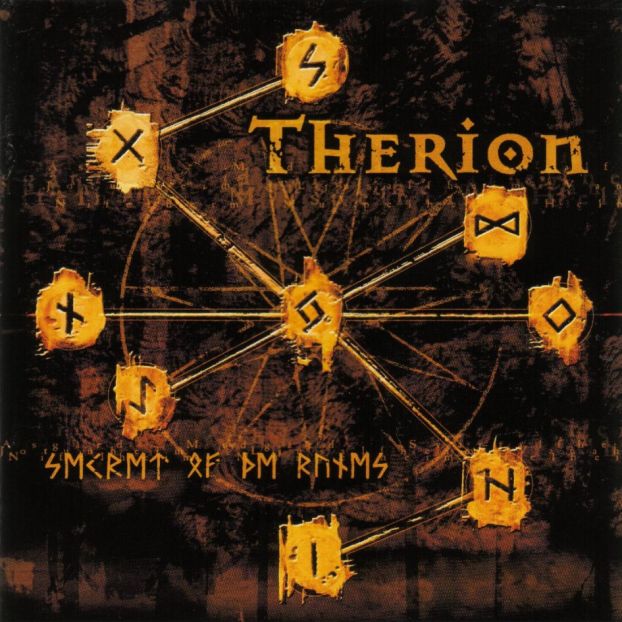
Tonight’s pondering mood wasn’t solely the result of the sore foot. It also reflected the evening’s music choice. Rather than an upbeat workout option, I was listening to one of those CDs that probably no one else in my personal circle would tolerate. As I tread, I assaulted my brain with the symphonic/opera metal that has increasingly appealed to me as I near forty. Guitars are tuned low and fluctuate between dirge and thrash, while choruses of ladies and lords sing overwrought, stylized lyrics in languages I cannot understand. Occasional interludes of baroque violins and acoustic guitar create a Lord of the Rings transcendent feeling. Tonight it was Secret of the Runes by the group Therion, a series of “movements” – sung mostly in Danish, I think – each evoking one of 10 Norse runes, the stuff of Scandinavian legend and Viking romance. While likely cheesy to some, I find it calming. Why odes to Midgard and Nifelheim would send my thoughts reeling back to that particular day however, I do not know.
I ask myself over and over: why didn’t he just give up? By then he would have heard that thousands of regular army had been allowed to simply go home without any registering or questioning. Disarmed former combatants were all over the town, unmolested. Our man simply must have known that he had an option to give up!
He did not give up though, damnit! He did not emerge slowly nor did he yell “don’t shoot” or anything similar in Arabic, English, or sign language for that matter. His weapon was not over his head nor at his side; it was up in both hands and his finger was on or near the trigger. He came bursting up out of that bunker like a bat out of hell.
There were actually two men in that bunker but I can’t wrap my mind around the existence of the other one as I never saw him. The commandos reacted so quickly to the first threat that the second guy never even made it up out of the hole; he was hit before coming into my view. Thus, only the first guy, the guy, etched his way into my memories.
When I’m on the treadmill, all feels right and relaxed. I focus on the music and my consciousness drifts peacefully. Afterwards, I often head to the pool to just float easily and cool down. By the time I head in for bed, I am enjoying a serenity and lightness often absent in my normal mental mess. I consistently note that “this is good” and make personal resolutions to exercise more, eat right, stop being so damn angst-ridden, and get back to being the happy person I pretend I used to be. While work-related stuff sometimes drifts passingly through my wandering thoughts, the contemplated goals and contented plans never have to do with work itself, a part of life that seems unimportant during these moments of crystal blue.
The steps leading out of the bunker exited towards an area where there were no troops. I saw him rush out and clearly remember thinking “oh shit, he’s gonna get shots off at the Brit kids,” which is the reason I know he should have had time to fire. The commandos moved like a well-oiled, Swiss-engineered machine, or a ballet or…. something. Smooth is fast and they were smooth. I don’t remember actually seeing them shift but suddenly they were shifted and the man was going down. The commandos had rotated on their pivots and were right where they needed to be with no big gestures at all.

Even the shots themselves were silky and surreal, no rat-a-tat-tat of automatic firing but a series of five or six individual, precise trigger pulls. I’d swear I saw two bullets come out of the man’s torso; they must have gone in just behind his right arm and come across diagonally and toward the front. The sensation was that of seeing mists of air puff out of his chest as each bullet exited. He started to fall forward only after the two bullets I saw – I swear I saw them – had passed through. The man kept hold of his weapon and simply fell forward on top of it. There was no effort to put his hands out to break the fall or any other reaction I could see. I assumed he had died instantly and that was why there was no reflex action, but who knows.
Quickly as it began, the moment was over. The bulk of the machine turned its attention back to securing the broader area, while a few troops proceeded to check the bodies and remove the weapons. There was no yelling or even talking that I can remember.
My foot had swollen up pretty good by the morning after my fall but by tonight, five days later, the swelling was generally gone save for a small area at the front of my ankle. I didn’t feel any pain or tenderness while on the treadmill, although I could find the soreness by rotating the foot side to side. The funny thing – or the probably physiologically perfectly natural thing – is that it has only started to bruise up now. I guess the blood – ‘cause that’s what makes a bruise, right? – has begun washing downwards with gravity and pooling up under my ankle bones and out by my toes. My wife and son think the bruising between the toes is humorous. They’ve both been good enough to give me a few quick foot massages that really make it feel better.
There were crowds of people all around watching the aftermath of the initial attack. It reminded me of people coming out to watch firefighters put out a fire or construction workers undertake a demolition job. There was a great calmness, with people idly chatting, pointing, or just staring. I don’t recall any difference in the crowd before and after the man came up out of the bunker. As the body lay there, I looked around and remember noticing that there were no indications of shock or grief or outrage or surprise or fear or excitement or joy among the crowd of onlookers; instead they all seemed to remain unmoved and unfazed.

I didn’t do it tonight but I often place a candle in the room and then do my hour on the treadmill while the candlelight flickers. I don’t use the flowery, scented candles though, just a simple wax job. I like them to be inside painted glass or some other colored holder so that the flickering is muted and textured on the walls. I have also found that music from speakers, no matter how loud or how good the quality, does not do it for me when I am treading. It really has to be headphones.
Which reminds me, I’ve been wanting to rent that old movie “Altered States” about the guy who builds a sensory deprivation tank and proceeds to go on weird mental trips. I remember when it first came out it was the talk of the high school hallways. (“It’s like drugs, man.”) I haven’t seen it since then though and I’m a bit afraid that its effects/story won’t have withstood the years and it won’t live up to my memories. That would be a bummer.
— originally written early 2004


 Victim of the Fury